Preschool Worksheets for Ages 3 to 4
Short, simple worksheets for children who are just starting to hold a pencil: lines, names, shapes, cutting, counting and first sounds.
What preschoolers are ready for
Between about three and four, children are building the hand strength and control that writing needs later. Most can scribble with purpose, copy a straight line and a circle, count a few objects and recognize the first letter of their own name. This is also the age that many places call nursery. The best worksheets for this stage are short, big and friendly, because a three-year-old has a short attention span and small hands.
Looking for a whole year instead of single worksheets? The free Preschool and Kindergarten Curriculum has a 36-week plan for ages 3 to 4, with a workbook for every week and a guide for the grown-up.
How to use this page
Choose by skill rather than by worksheet. If your child is not yet holding a pencil comfortably, start with the pencil control and cutting tools. If they love their own name, begin with name tracing. Each tool below opens a worksheet that is already set to a preschool level, with big letters, few items and plenty of space. You can change every setting before you print.
Pencil control and hand skills
Straight lines, curves, shapes and cutting get small hands ready for writing.
Preschool Line Tracing
Straight, slanted and curved lines for beginners.
Shape Tracing
Dotted or solid shapes, names and a coloring strip.
Scissor Skills
Cutting practice: lines, zigzags, curves, shapes and pictures.
Coloring Pages
Animals, birds, fruits, vehicles and more: print 1, 2 or 4 pictures per page.
Pre-Writing Lines
Lines, curves, waves, loops and spirals at three levels.
Mazes
Easy mazes with wide paths and a picture at each end.
Names, letters and first sounds
Start with their own name, then letter shapes and the sounds letters make.
Numbers and counting
Big, simple numbers for children who can count a few objects.
Looking and matching
Puzzles that train careful looking, with big pictures and few pairs.
Shadow Matching
Join each picture to its shadow: 4 to 10 pairs.
Picture Matching
Match identical pictures or things that go together.
Patterns
Simple AB and AAB patterns: what comes next, or continue the row.
Visual Discrimination
Odd-one-out puzzles with obvious differences and short rows of three or four.
Free printable workbooks for preschool worksheets
Complete PDF books, planned in small steps, that suit this age group.
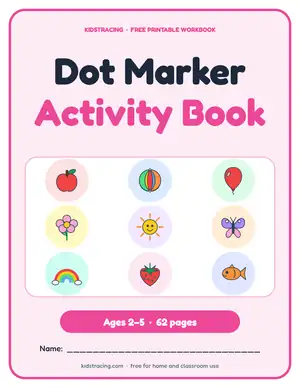
Dot Marker Activity Book
Big letters, numbers, shapes and pictures filled with circles for dot markers, stickers or fingertips.
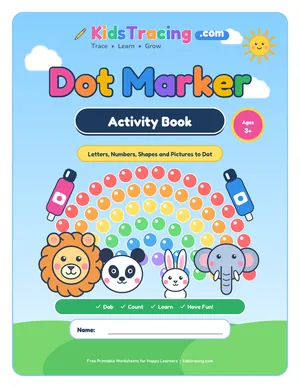
Dot Marker Alphabet and Numbers Book
Dab capital and small letters A to Z, count and dab numbers 1 to 10, then shapes and 15 pictures.
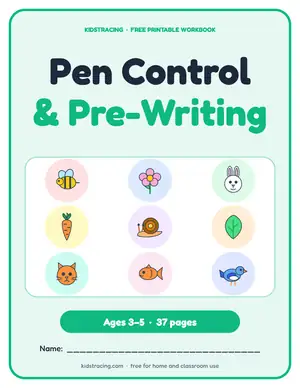
Pen Control and Pre-Writing Book
Lines, curves, zigzags, loops and spirals, plus paths from a bee to a flower, to build pencil control.
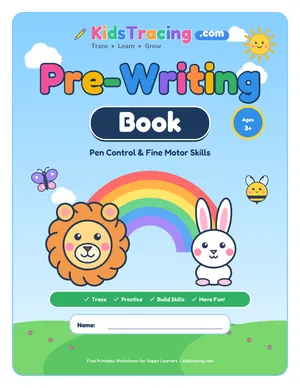
Pre-Writing Lines and Shapes Book
Sixteen tracing pages of lines, curves, shapes, patterns and animal paths, one stroke per page.
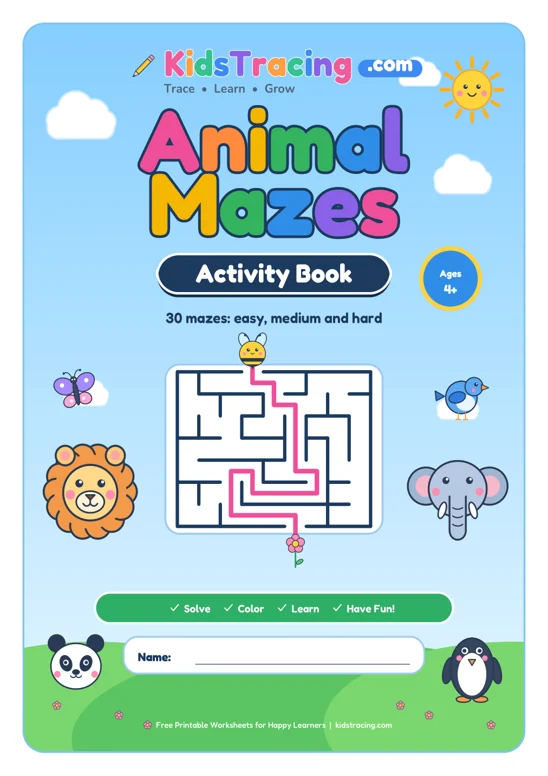
Animal Mazes Activity Book
Thirty animal mazes in three levels, from a bee and a flower to a flamingo and a shrimp, with fun facts and an answer key.
Shapes Tracing and Coloring Book
Ten shapes to trace, hunt for and color, plus tracing practice and matching games.
Scissor Skills Cutting Practice Book
Cutting practice from first snips to zigzags, shapes and pictures to cut out and color.
ABC Tracing Book
Every letter A to Z with numbered stroke arrows, a picture to color and a word to trace.
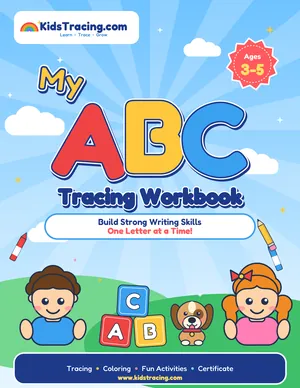
My ABC Tracing Workbook
A picture for every letter A to Z to trace, color and circle, plus four review tests and a certificate.
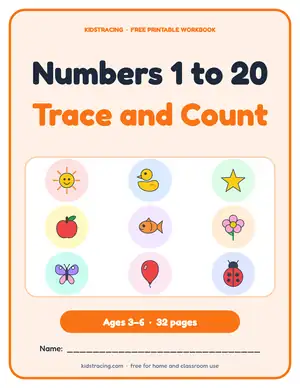
Number Tracing and Counting Book
Trace, count and color every number from 1 to 20, then practice number words and skip counting.
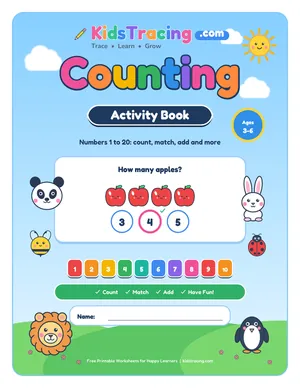
Counting Activity Book
Count to 20 with ten frames, tally marks and dice, then compare, skip count, add and take away. With an answer key.
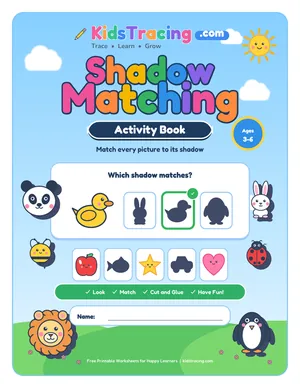
Shadow Matching Activity Book
Draw lines, circle, find twins and odd shadows, and cut and glue, from three big pairs to shadows that face the wrong way. With an answer key.
Animal workbook: My Little Zoo: Color and Trace Book (28 animals to color and trace, for ages 3 to 5) · All free printable workbooks
Tracing worksheets for 4 year olds
Four-year-olds are usually ready for a little more than three-year-olds. Many can trace straight and curved lines, draw a circle and a cross, and recognize the letters in their own name. Start with big dotted lines and shapes, then move to letters and numbers, and keep each session to about ten minutes.
- Line tracing and curves and loops for pencil control.
- Shape tracing worksheets for circles, squares and triangles.
- Name tracing to practice the letters your child already knows.
- Letter formation worksheets to learn where to start each letter.
- Number tracing 1-10 for the first numbers.
- Word tracing for short, familiar words once letters feel comfortable.
When tracing gets tiring, switch to a looking game such as pattern worksheets or picture matching, then come back to tracing later.
A simple week to try
- Monday: trace a few rows of lines with preschool line tracing.
- Tuesday: make a name tracing sheet and trace the first letter together.
- Wednesday: do a short shadow matching puzzle with four pairs.
- Thursday: count five objects, try a short counting worksheet, then trace the numbers on number tracing for preschool.
- Friday: practice snipping and straight lines with scissor skills.
- Any day: an easy maze, an AB pattern sheet or a 1-to-10 dot to dot makes a nice change.
Five to ten minutes a day is plenty. Skip a day whenever your child is tired or not interested.
When worksheets are not the answer
Young children learn most through play. Drawing in sand, squeezing play-dough, threading beads, building with blocks and painting with big brushes all build the same hand control as worksheets, and they are often more fun. Use worksheets as one small part of the day, and let your child stop when they have had enough.
Guides to read first
Not sure your child is ready? Go through the handwriting readiness checklist, then see when children can draw each shape in pre-writing shapes by age. Our guide on how to teach a child to use scissors goes with the cutting sheets, and the shadow matching activities guide has games to play away from the page. For a routine, see handwriting practice at home. Once names feel easy, our guide to letter tracing worksheets A-Z explains which letters to start with and how to handle tricky pairs like b and d. To plan the whole day of learning and play, read how long a child should study at home. For a calm, low-pressure activity, print a page with the coloring page maker, and if school is coming up, check kindergarten age requirements and cutoff dates.
In December, the free Christmas Tracing and Coloring Book, Christmas Counting Book and Christmas ABC Tracing Book give seasonal practice for the same skills. For a Halloween theme, the Halloween Comic Book adds four friendly picture stories to read aloud, with sound-word tracing and counting pages.
Printables that are not worksheets
Routines and rewards matter at this age too. The free reward charts, potty training charts and sticker sheets can help, and the picture scavenger hunts make a good rainy-day game.
Frequently asked questions
How many worksheets should a preschooler do each day?
One short activity of five to ten minutes is enough for most three- and four-year-olds. It is better to stop while your child is still interested than to finish a whole page.
Should preschoolers learn to write letters?
Many children are ready to trace letters in their name by four, but there is no need to rush. Pencil control, cutting, shapes and counting come first, and they prepare the hand for writing.
What if my child does not want to sit and trace?
Try a different activity, such as cutting or matching, or work on a bigger scale, for example drawing lines with chalk outdoors. Make it a game, and try again a few days later.
Are these worksheets suitable for nursery?
Yes. They suit children of about three and four years old, the age group called nursery in many countries and preschool in the US. Pages for kindergarten are for the following year.
What tracing worksheets are best for 4 year olds?
Big dotted lines, shapes, the letters in their own name and the numbers 1 to 10 work well. Keep sessions short and let your child color or draw when they need a break.
More ways to browse
Looking for a different age? See Kindergarten Worksheets. Four- and five-year-olds (pre-K) can mix worksheets from both pages.
Browse by skill: Handwriting and Tracing Worksheets for Kids · Number Worksheets for Kids · Phonics Worksheets for Kids · Shape Worksheets for Kids · Matching & Visual Thinking Worksheets · Fine Motor Skills Worksheets