Letter Tracing Worksheets A-Z
Published by Hasnat N, Founder · November 19, 2026 · 8 min read
Quick answer: Alphabet tracing worksheets give children dotted capital and small letters to follow with a pencil, building letter recognition, correct formation and pencil control. Start with one letter at a time, keep sessions short, and say the letter name and sound as your child traces.
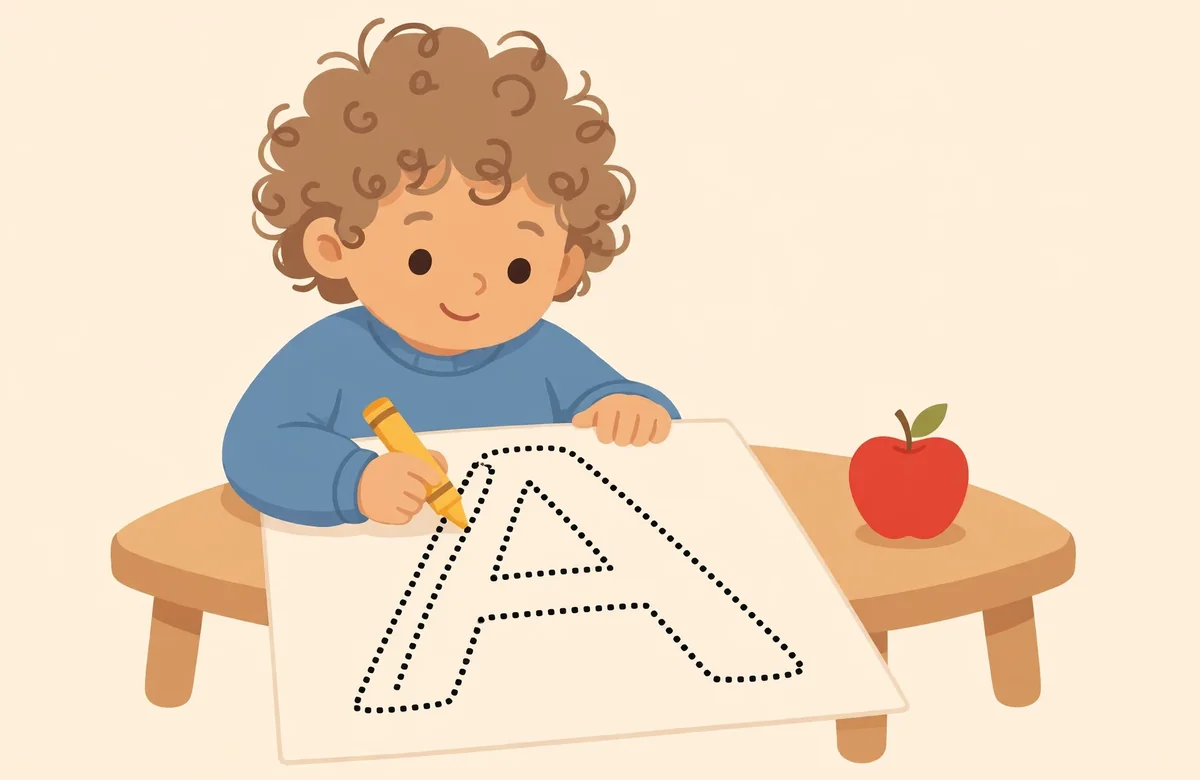
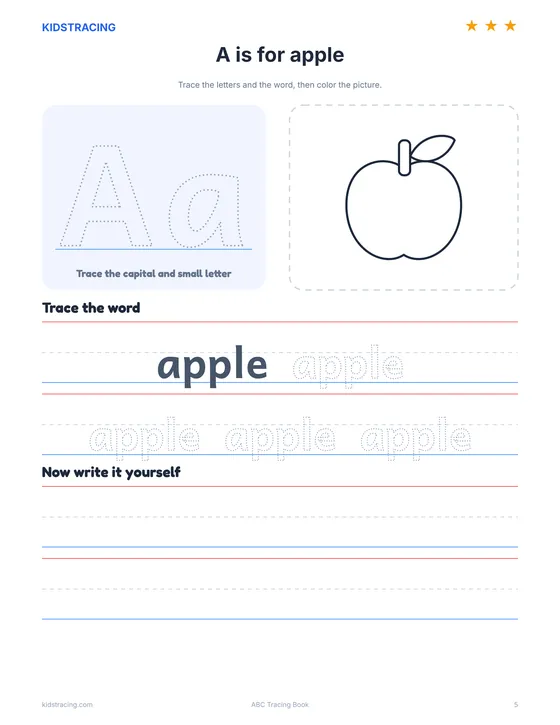
Alphabet tracing worksheets are practice pages that show each letter of the alphabet in dotted lines for a child to trace over with a pencil or crayon. Each page shows a big capital letter and its small letter, a picture that starts with that letter, and rows of dotted letters to follow. They are an easy way for a preschool, pre-K or kindergarten child to learn what letters look like and how to write them. Every worksheet and workbook on this page is free to print in US Letter or A4, with no sign-up.
This guide explains what alphabet tracing teaches, whether to start with capital or small letters, a sensible order for the letters, and how to handle tricky pairs like b and d — plus five easy games and a clear next step.
What alphabet tracing teaches
Tracing a letter is more than copying a shape. Each dotted path practices three skills at once. First, letter recognition: children learn to tell letters apart by their shapes, so A does not look like H and m does not look like w. Second, letter formation: they learn where each stroke starts and which direction it goes. Third, pencil control: they build the hand strength and steady movement handwriting needs. Say the letter name and its sound while your child traces, and the sheet starts teaching early reading too.
In kindergarten, recognizing and naming all upper- and lowercase letters is part of the Common Core expectations for reading (RF.K.1.D). Tracing worksheets are a practical way to work toward that goal. They work best as part of a mix: read books together, point out letters on signs and cereal boxes, and let your child write for real reasons, like signing a birthday card.
Uppercase vs lowercase: which comes first
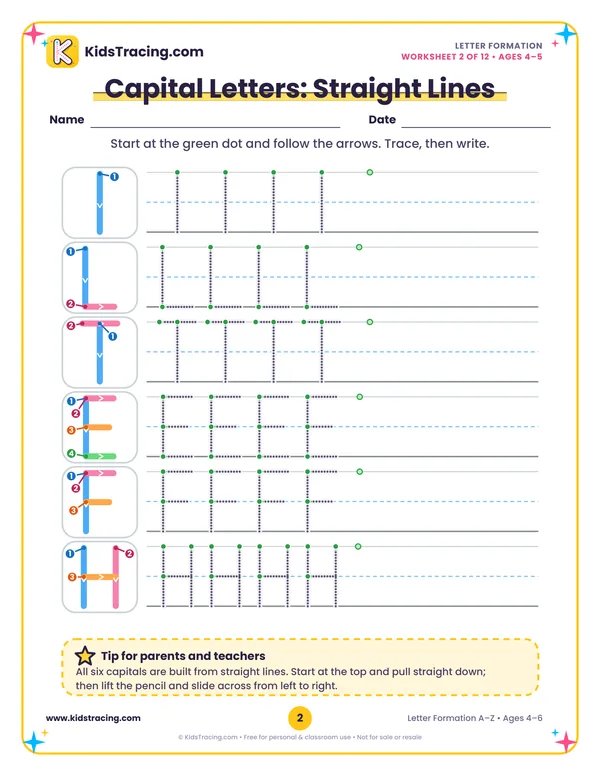
Capital letters are easier to write. Most of them are made from straight lines and simple curves — E, F, H, I, L and T are just lines joined together — so they are a friendly first step. Small letters are harder: they are smaller, sit on different lines, and some, like a, g and y, have tricky shapes. But small letters are the letters children read most — almost everything in a picture book is written in small letters.
Teach the two forms together, as a pair: trace capital A and small a on the same day, and say the name and sound of both. Some pairs look almost the same — C and c, O and o, S and s, X and x, Z and z — and children learn those quickly. Others change completely, like A and a, B and b, D and d and G and g, so give those pairs extra time. Our letter formation worksheets let you choose capitals, small letters, or both on the same page, so you can match the sheet to the stage your child is at.
How to use alphabet tracing worksheets
Aim for about five to ten minutes (three to five at age 3), two or three times a week for a preschool or pre-K child, and a little more for a kindergartner who asks for it. Stop while your child is still enjoying it — a short, happy session teaches more than a long, tearful one.
- Look first. Point to the big letter and say its name and sound together: "This is B. B says /b/, like ball."
- Trace in the air. Draw the letter big in the air with a finger, starting at the top.
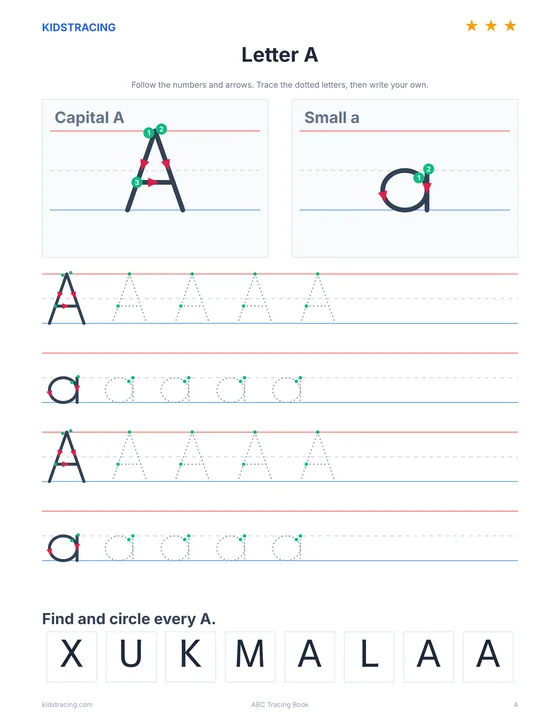
- Follow the dots. Start at the green dot and follow the arrows. One slow, careful letter teaches more than a whole row rushed through.
- Trace, then try alone. After the dotted rows, write the letter on the blank line without help. Wobbly is fine.
- Find it in the wild. After the sheet, look for the letter in a book, on a sign, or in your child's name.
A short crayon or a small pencil helps young children hold the tool correctly, because there is less to grip. A tripod grip — thumb and two fingers — is the goal, but do not force it before your child is ready. If the grip is still wobbly, pre-writing lines and shapes are a better place to start than letters. Try the routine with the letter A worksheet.
A sensible order for teaching the letters
Teaching the letters in A to Z order feels natural, but it is not the most useful order. It puts look-alike letters close together, and it makes children wait months before they can build a single word. A better order mixes easy-to-form letters with letters that quickly make words.
Start with the letters in your child's name. From there, many teachers and phonics programs start with a small set of high-frequency letters — s, a, t, i, p and n are a popular first group — because those six letters can already make words like sat, pin, tap and nap. Add m, d, g and o next. The letter S worksheet and the letter M worksheet are good places to begin that set.
Another useful way to order the letters is by how they are written: straight-line letters first (L, T, H, E, F, I), then letters with curves (C, O, S), then letters that mix lines and curves (B, D, P, R), and finally the trickiest shapes (K, Q, X, Z, G). Our guide to letter formation order explains this grouping in full, with a week-by-week plan. Whichever order you choose, teach one letter well before adding the next.
Tricky letters and common confusions
Some letters are confusing because they are mirror images of each other, and mixing them up is completely normal in preschool and kindergarten. Most children sort out b and d by the end of kindergarten or during 1st grade. Patient practice beats correction.
- b and d. For b, the stick comes first: a straight line down, then a circle. For d, the circle comes first, then the stick goes up. The "bed" trick helps too: hold up both fists with thumbs out — the left hand makes a b and the right hand a d.
- p and q. The letter p starts with a stick that goes down below the line, then a circle. The letter q is a circle with a small tail, and it almost always appears with u right after it, which gives children a helpful clue.
- m and w. The letter m has two humps that point up, like mountains. Turn it upside down and it becomes w.
- n and u. The letters n and u are the same shape turned over. If your child writes one when they mean the other, turn the paper around and show them the trick — children usually love it.
If reversals are still frequent in 1st grade, keep sessions short and playful, and mention it to their teacher. Extra practice with the letter B worksheet and the letter D worksheet, side by side, helps children see the difference.
Five easy games with alphabet tracing sheets
The same tracing sheet can be a game board. Try one of these after the tracing is done.
- Letter hunt. Ask your child to find the letter of the day in a picture book, on a cereal box or on a street sign. Five finds wins.
- Rainbow write. Trace the same letter three times, each time in a different color, tracing over the last color. Three practices in one.
- Mystery letter. Trace a letter on your child's back with your finger and ask them to guess which one it is. Then swap roles.
- Letter sorting. Cut out traced letters from finished sheets and sort them into capitals and small letters. Then sort again: straight lines and curves.
- Alphabet walk. Lay letter sheets on the floor. Call out a letter and your child hops to it — or call out its sound for an extra challenge.
For more game-like practice, try the beginning sounds worksheets or the find and color letters pages, which turn letter recognition into a coloring hunt.
What comes after alphabet tracing
Once your child knows most of the alphabet, the next step is connecting letters to sounds. Beginning sounds worksheets ask children to match a letter to the picture that starts with its sound — B for ball, S for sun. After that come CVC words: short words like cat, pen and sun that children can sound out letter by letter.
Name writing is a wonderful goal to work toward at the same time: a child who can write their own name has already mastered several letters. Our name tracing generator makes a personalized sheet with any name, and our guide on how to teach a child to write their name walks through the steps. For next steps by age, browse the preschool worksheets and kindergarten worksheets collections.
Free printables to go with this guide
Put this guide into practice with these free printables — click any card to open it.
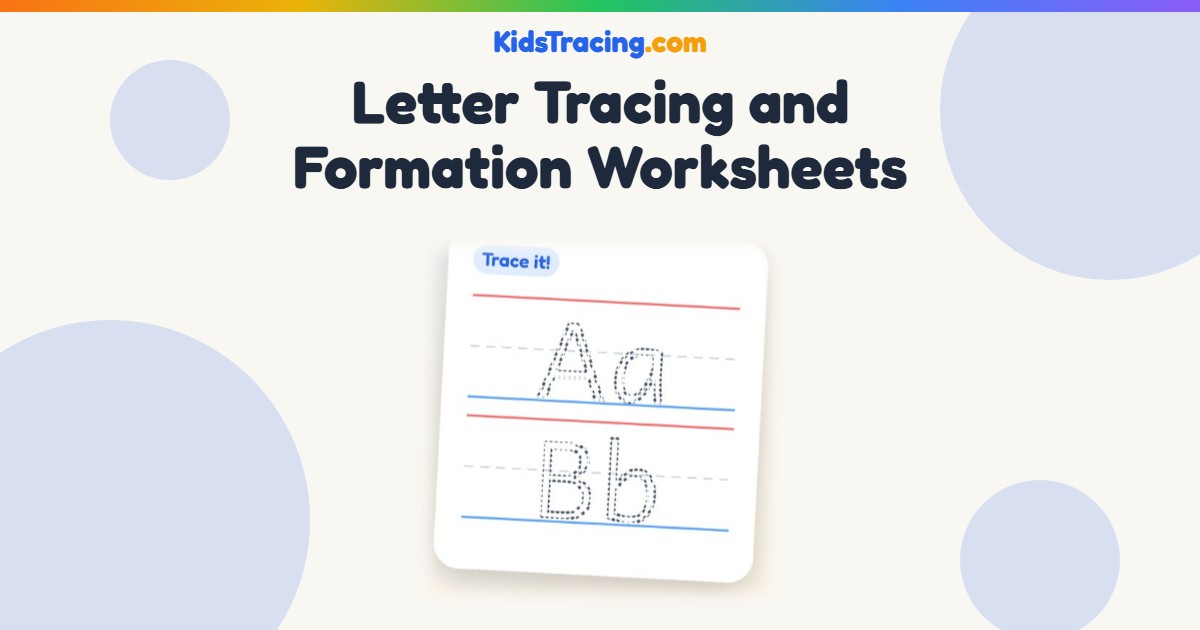
Letter Formation Worksheets
Make your own A–Z tracing pages with start dots and stroke arrows for every letter.
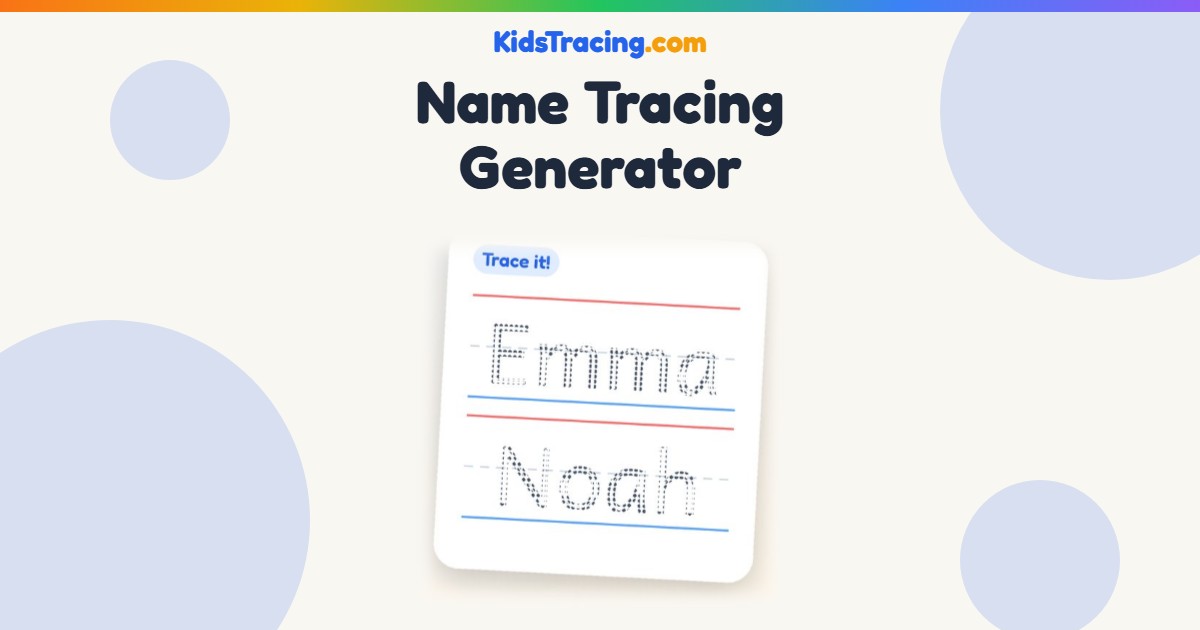
Name Tracing Worksheets
Type any name and print a personalized tracing sheet — a fun first step after the alphabet.
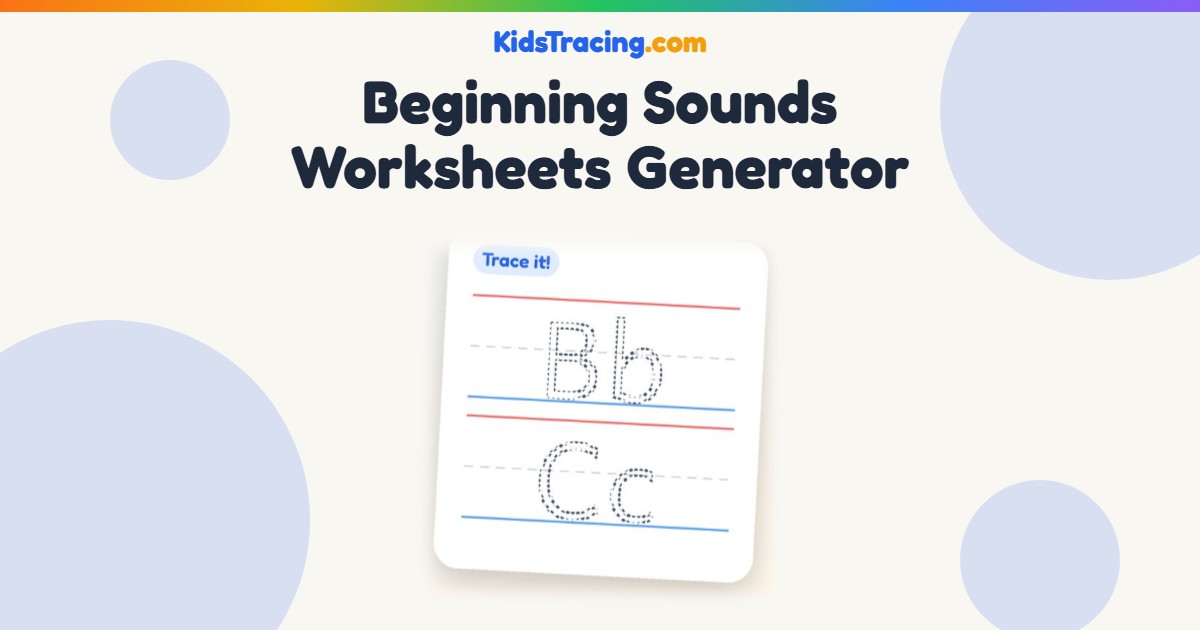
Beginning Sounds Worksheets
Match each letter to its sound with picture sorting and first-sound practice pages.
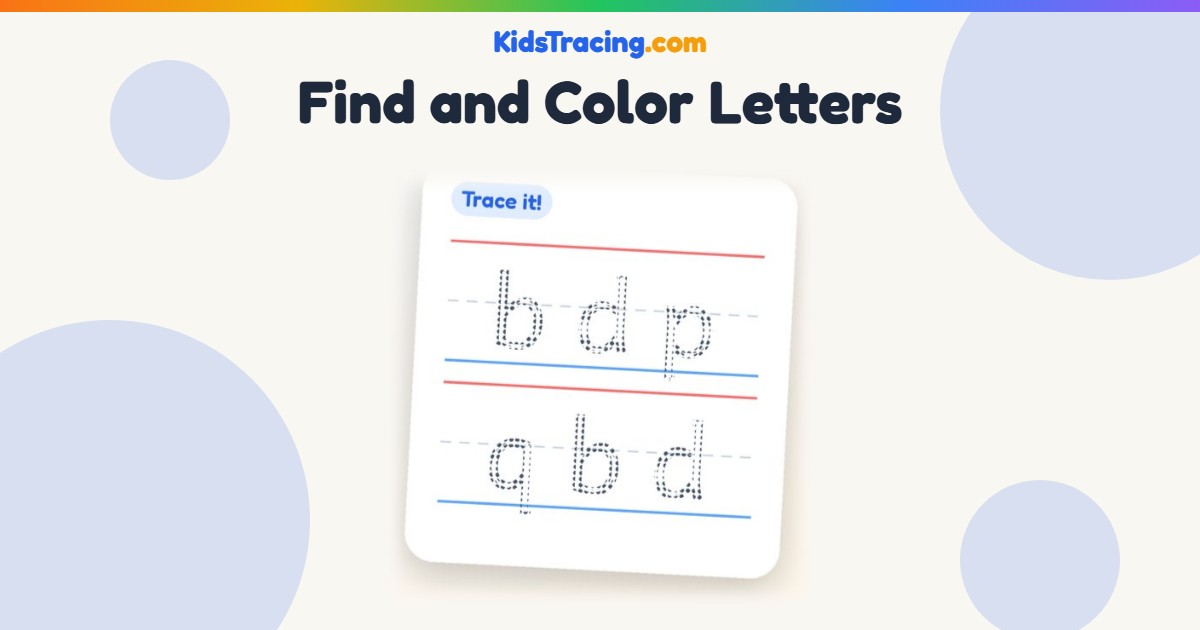
Find and Color Letters
Letter hunts and coloring pages that build letter recognition through play.
Or browse all of our free printable worksheets.
Free workbooks to go with this guide
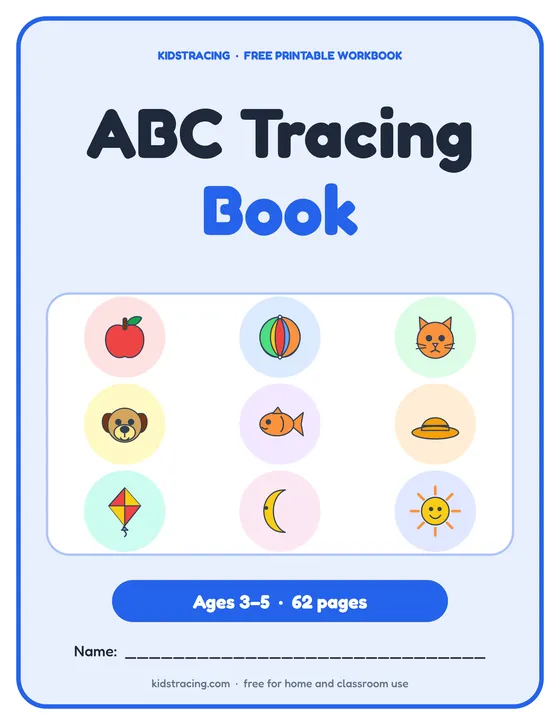
ABC Tracing Book
A 62-page workbook with stroke-by-stroke letter formation for A to Z, picture pages and alphabet games.
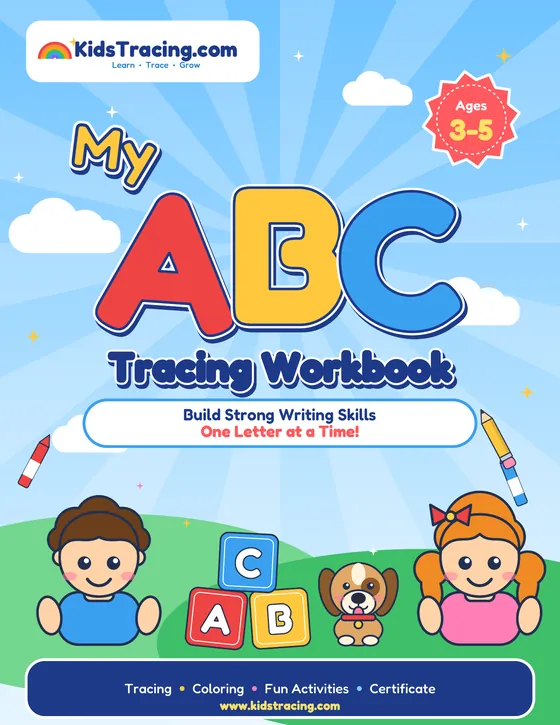
My ABC Tracing Workbook
A 38-page picture alphabet workbook, one page per letter, with review tests and a certificate.
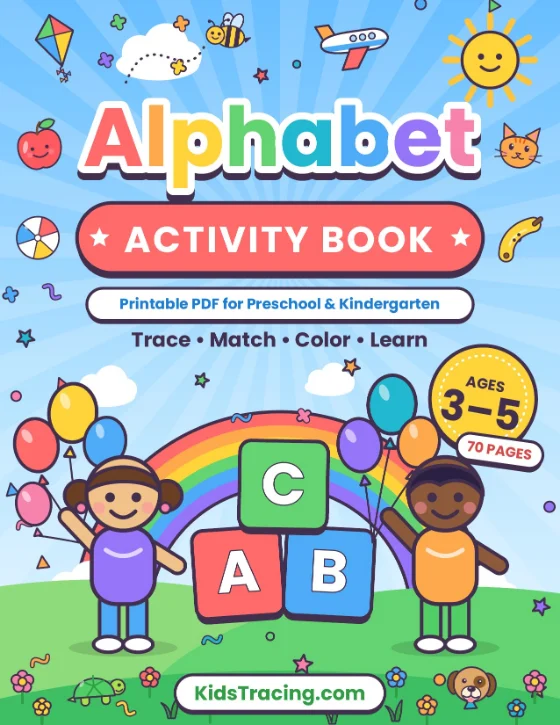
Alphabet Activity Book
70 colorful A to Z activity pages for ages 3 to 5.
Keep reading
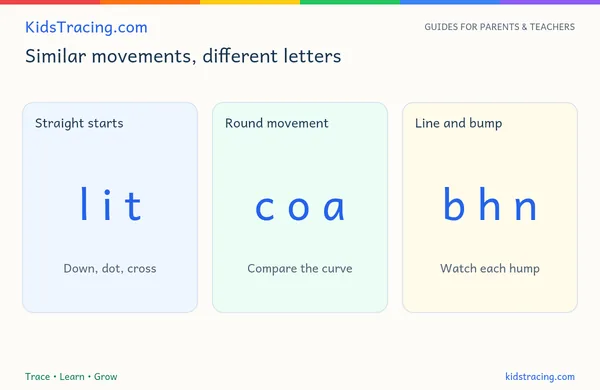
Letter Formation Order: Which Letters to Teach First
A practical order for teaching letters, grouped by how they are written.
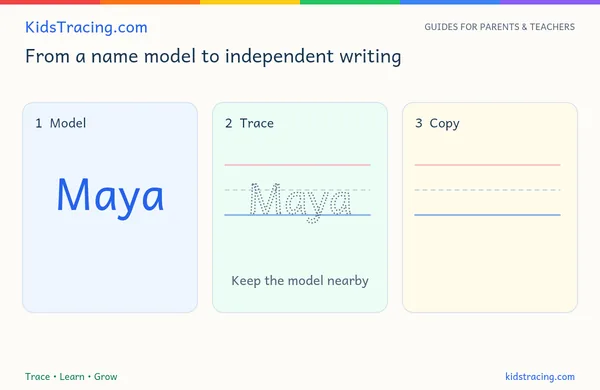
How to Teach a Child to Write Their Name
Simple steps for teaching name writing, from first recognition to writing alone.
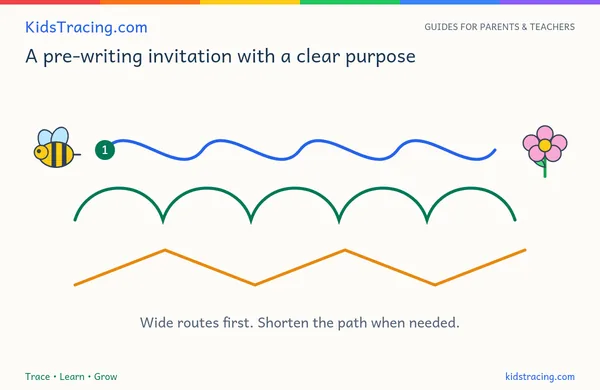
Pre-Writing Activities for Preschoolers: 15 Fun Ideas
Fifteen activities that build the strokes, strength and control children need before letter tracing.
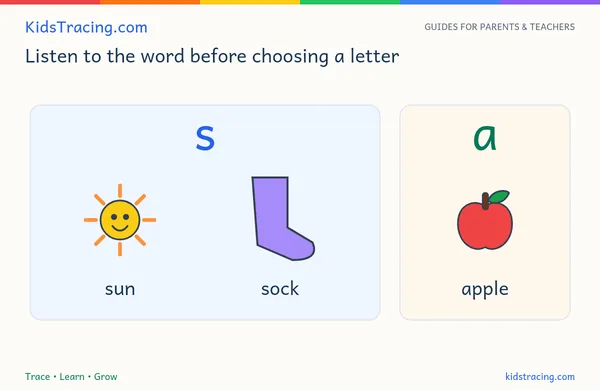
Beginning Sounds Activities for Preschool and Kindergarten
Spoken games and picture activities that connect each letter to its sound.
Try a one-letter tracing check
Print the letter S worksheet. Ask your child to trace the dotted S, then cover the sheet and write S from memory on blank paper. If the shape is close, celebrate it. If it is tricky, trace it in the air three times together, then try again tomorrow.
Frequently asked questions
At what age should children start alphabet tracing?
Most children are ready between ages 3 and 5, once they can hold a crayon and make circles and lines on purpose. Some 3-year-olds are ready; others do better starting with pre-writing lines and shapes first. Follow your child's interest: if they ask to write letters, they are ready to try.
Should children learn uppercase or lowercase letters first?
Teach them as pairs from the start — capital A with small a, capital B with small b. Capitals are easier to form, but small letters are the ones children read most. If your child is very young, start with capitals and add the small letters a few weeks later.
How many letters should my child practice each day?
One letter at a time is plenty, in a session of five to ten minutes. A new letter every day or two, with a quick review of earlier letters, works better than rushing through the alphabet in a week.
Why does my child mix up b and d?
Because b and d are mirror images, and telling mirror shapes apart is a skill that develops slowly. Mixing them up is normal through kindergarten and into 1st grade. The "bed" trick helps: with both fists up and thumbs out, the left hand makes a b and the right hand a d.
Are tracing worksheets enough to teach handwriting?
No — tracing is one part of learning to write. Children also need to form letters from memory, write for real reasons like cards and lists, and build hand strength through play. Use tracing sheets alongside those activities, not instead of them.
Where can I print free alphabet tracing worksheets?
Use the letter formation worksheets to make your own A–Z tracing pages, or print the ABC Tracing Book for a complete 62-page workbook. Both are free, with no sign-up.