Phonics Worksheets for Kids
Build early reading skills with worksheets that change every time you generate them.
A simple phonics practice routine
Start by saying one sound clearly and asking the child to listen for it at the beginning of familiar words. Next, show the matching letter and trace it while repeating the sound. Move to blending only after individual sounds are comfortable: say /m/ /a/ /t/ slowly, then join them into mat. Keep practice to a few examples at a time and revisit sounds that are easily confused.
Free phonics worksheet generators
Beginning Sounds
Picture questions: which picture starts with B?
Missing Letters
Fill in the missing letters of the alphabet.
CVC Words
Short a, e, i, o, u: reading, matching and word families.
Sight Words
Dolch lists: trace, find, missing letter and look-and-write.
Syllable Counting
Clap and count 1 to 4 syllables with pictures.
Rhyming Words
Circle, match or find the odd one out with rhyming pictures.
Alphabetical Order
Put letters or words in ABC order.
Ready-made worksheets
- Beginning Sounds A-Z worksheets – One picture question for every letter of the alphabet.
- Beginning Sounds for Preschool worksheets – Six easy questions with eight clear letters.
- Beginning Sounds for Kindergarten worksheets – Ten mixed questions with all 26 letters.
- Rhyming Words worksheets (PDF) – Ten printable rhyming pages with answer keys.
Free Printable Blends and Digraphs Worksheets (Ready-Made PDFs)
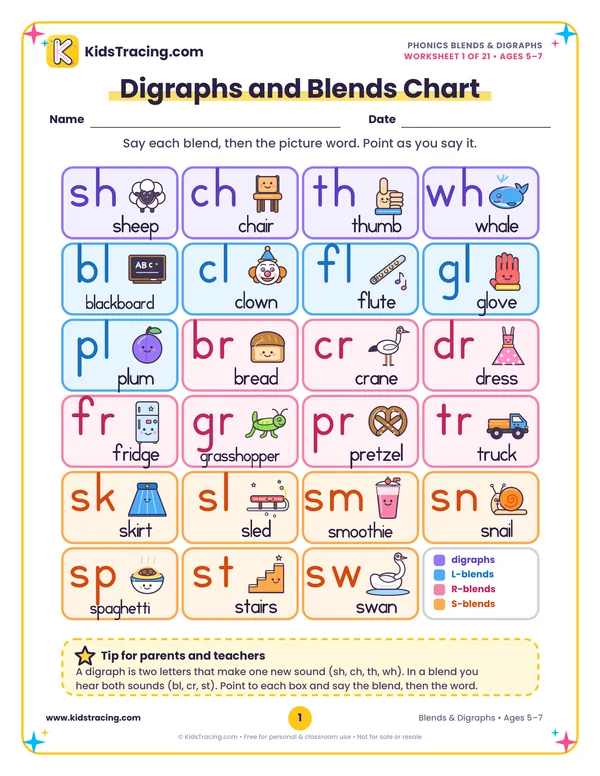
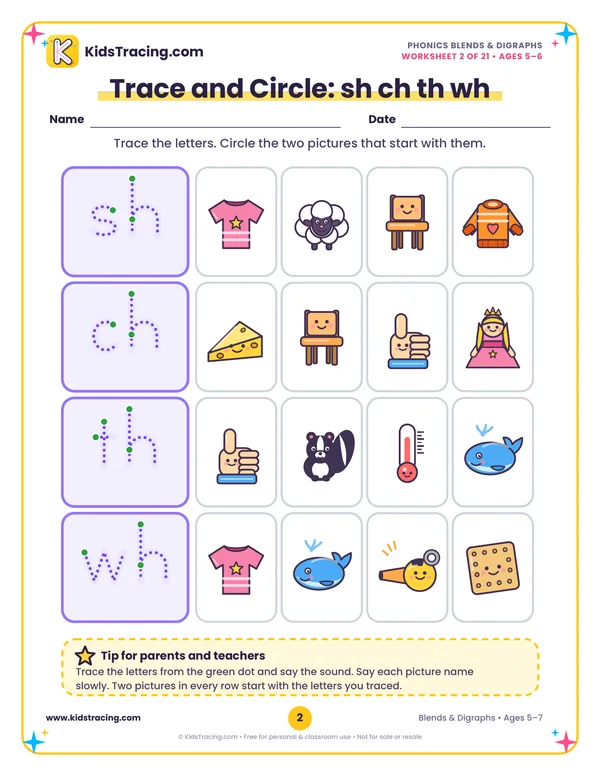
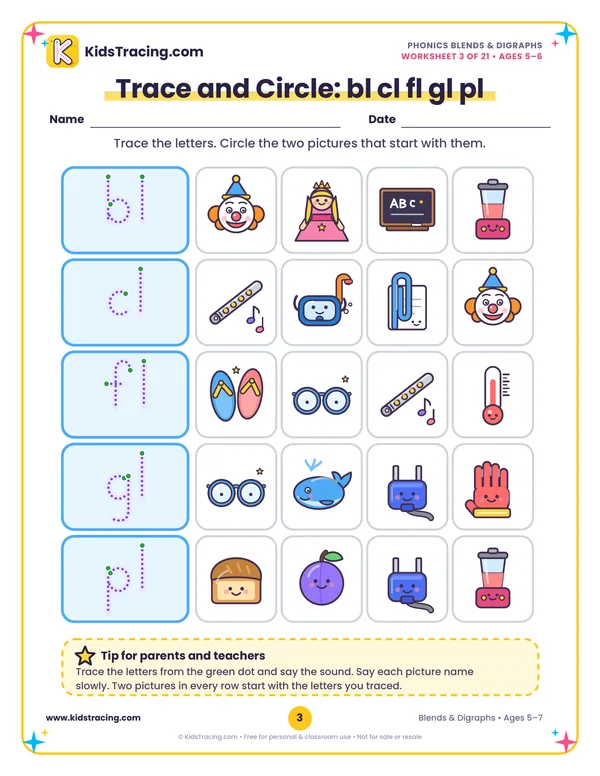
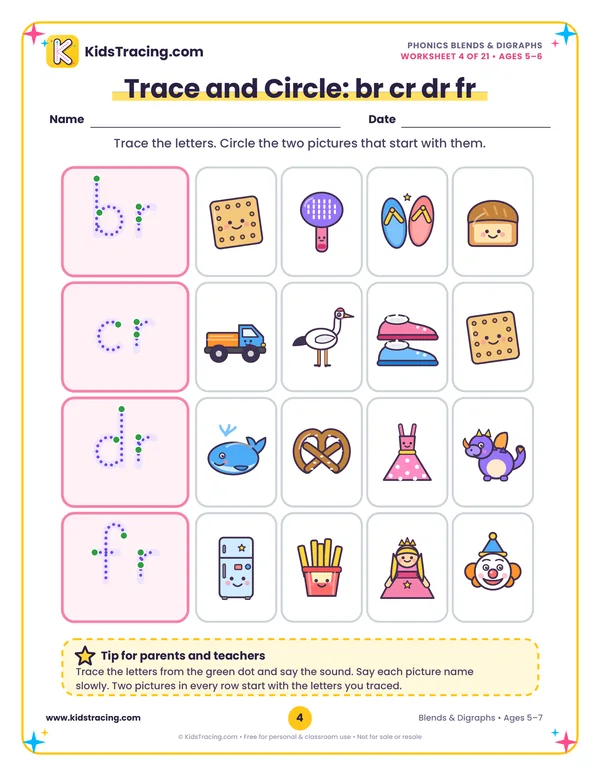
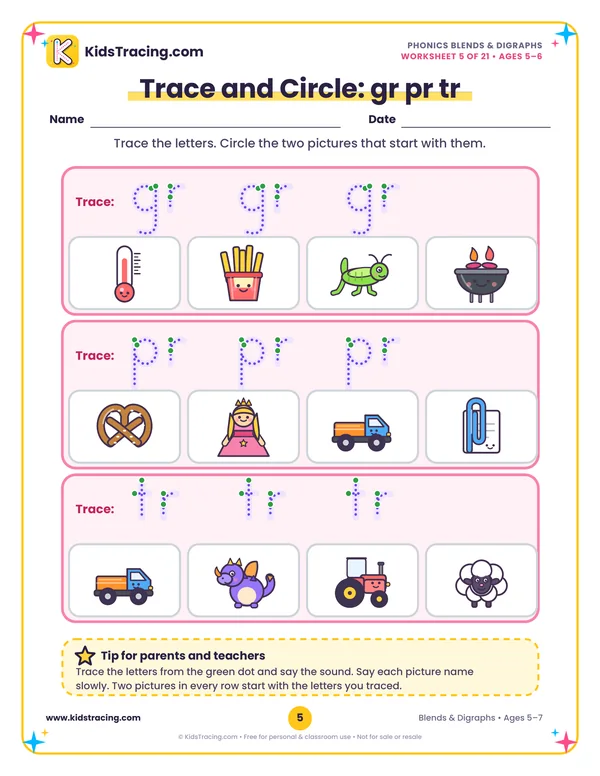
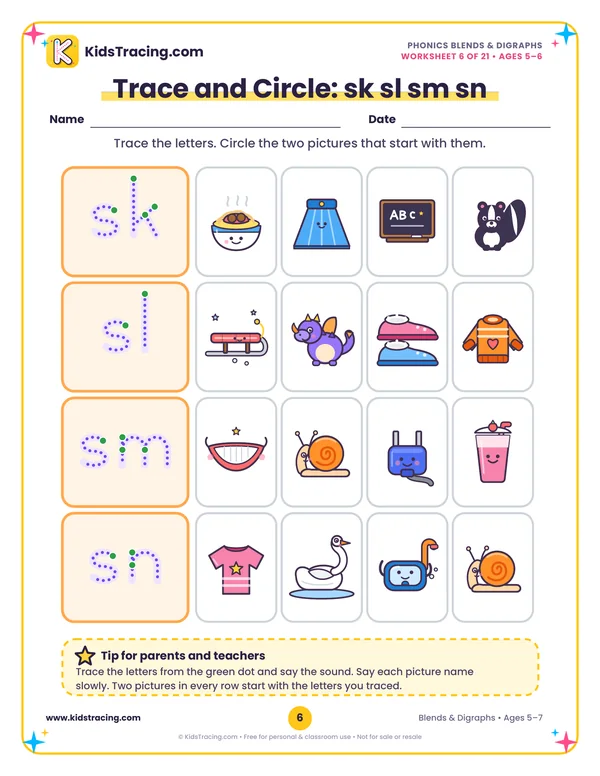
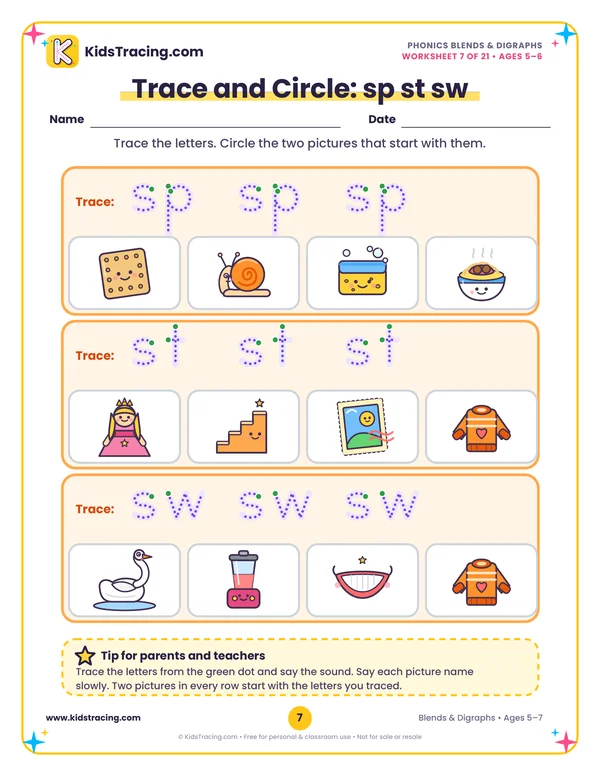
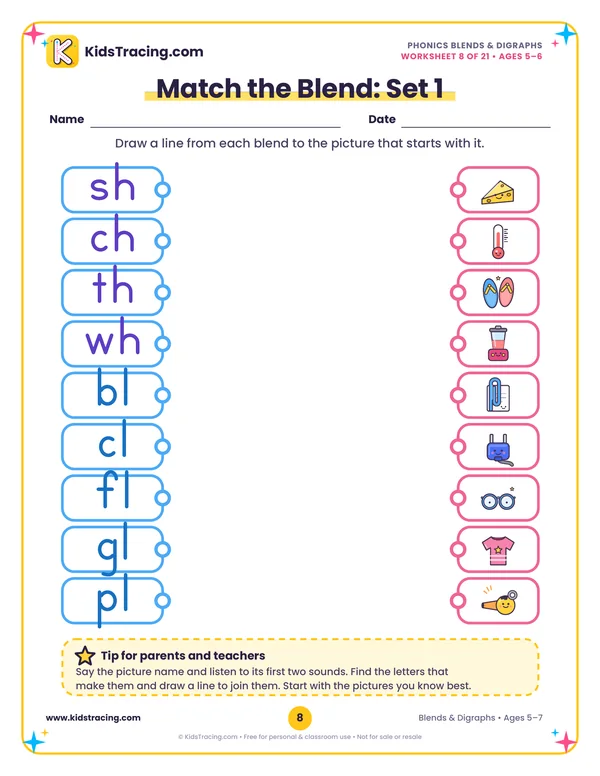
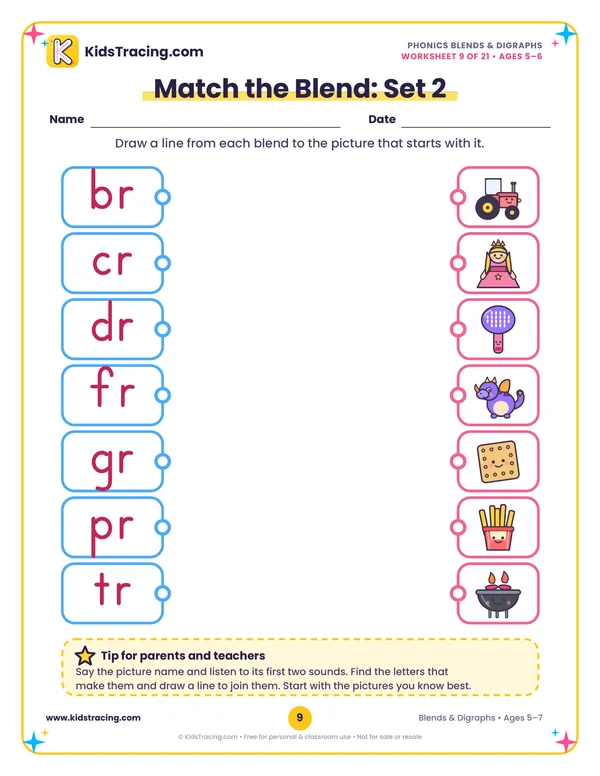
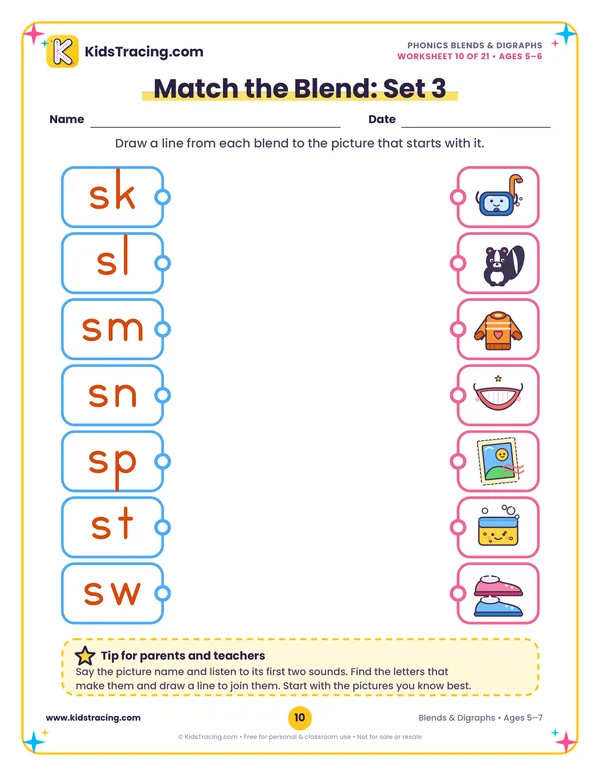
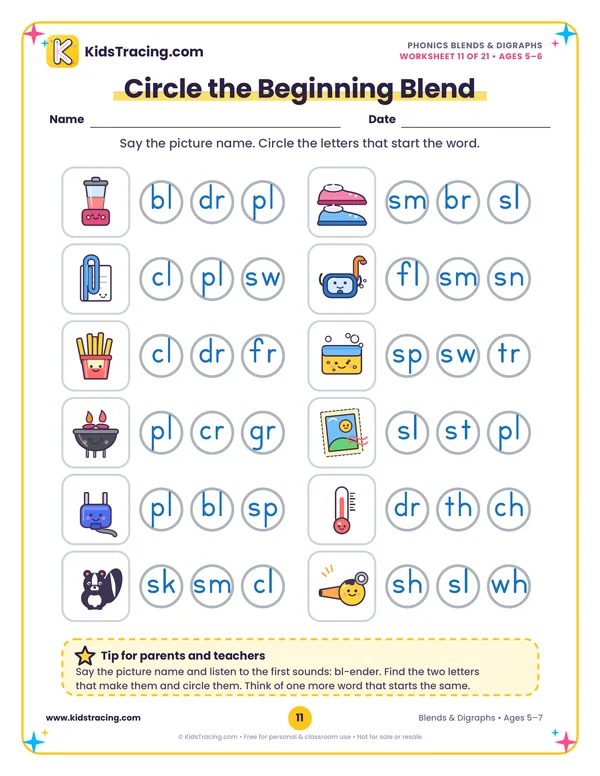
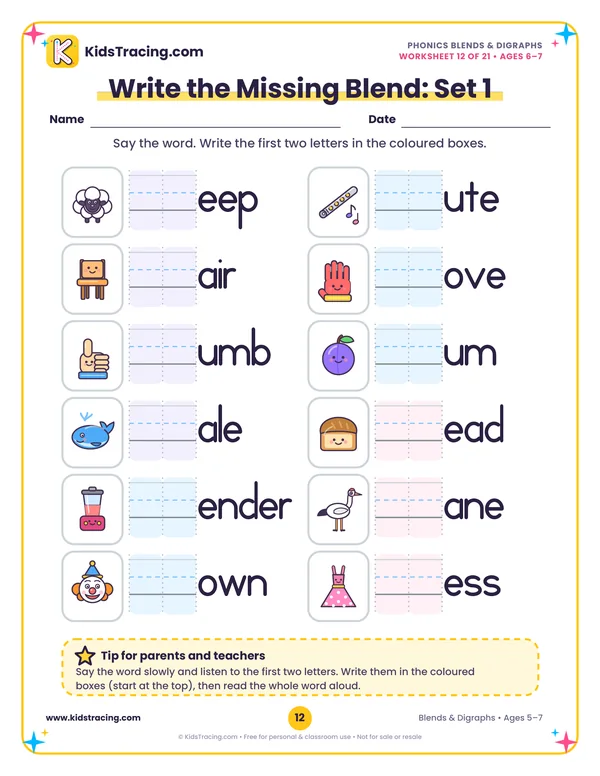
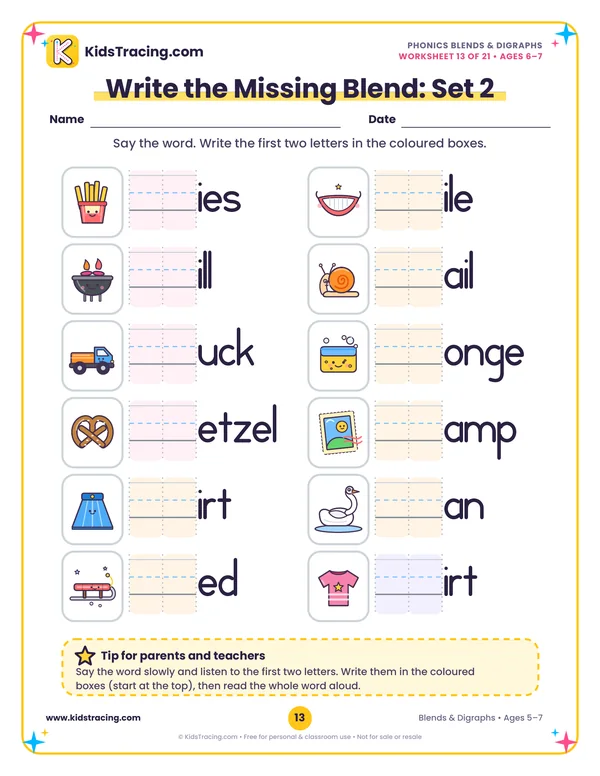
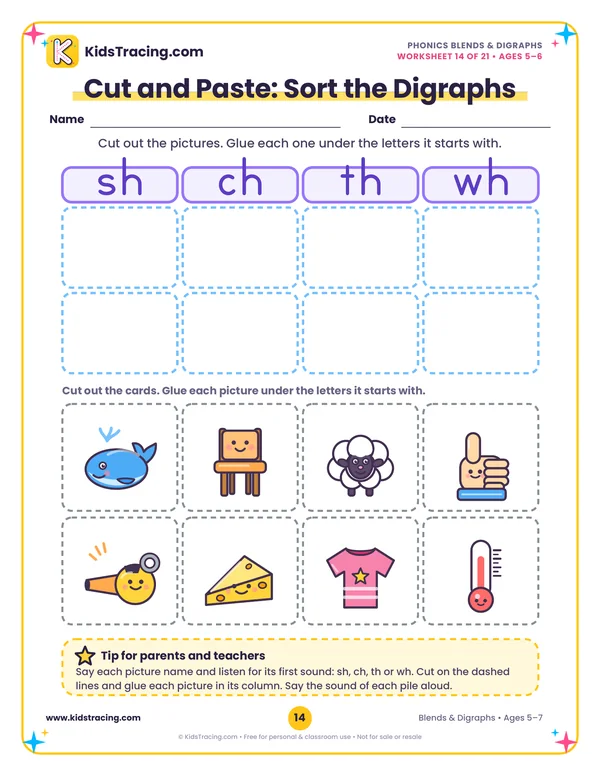
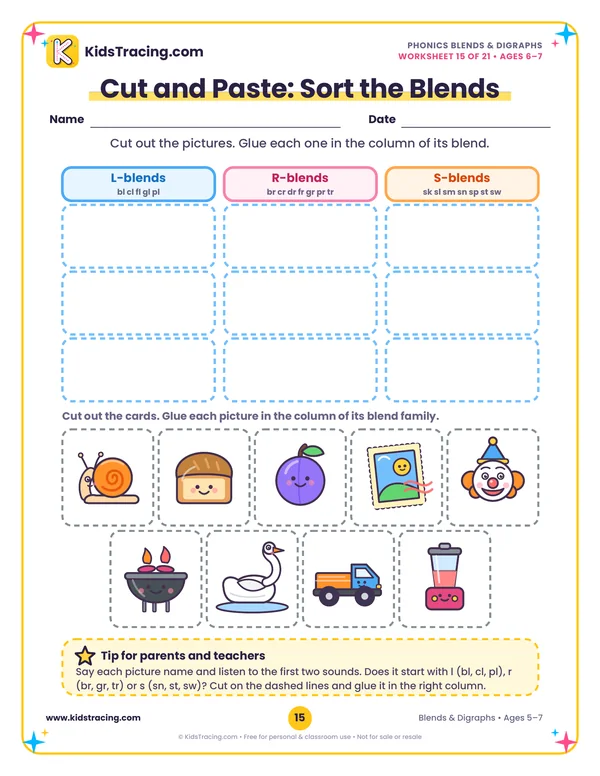
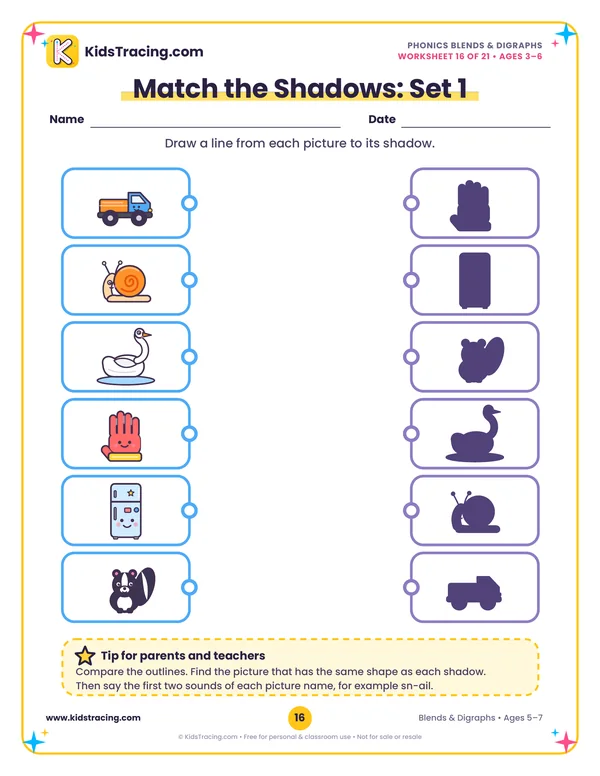
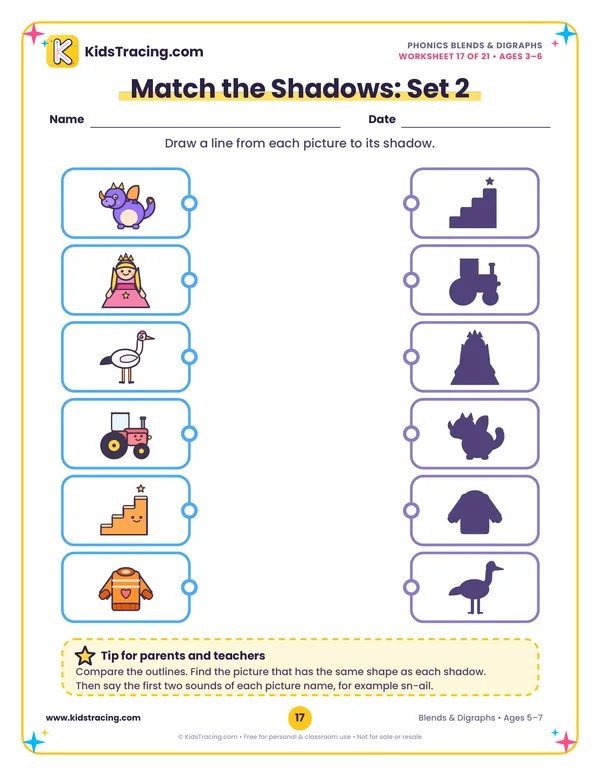
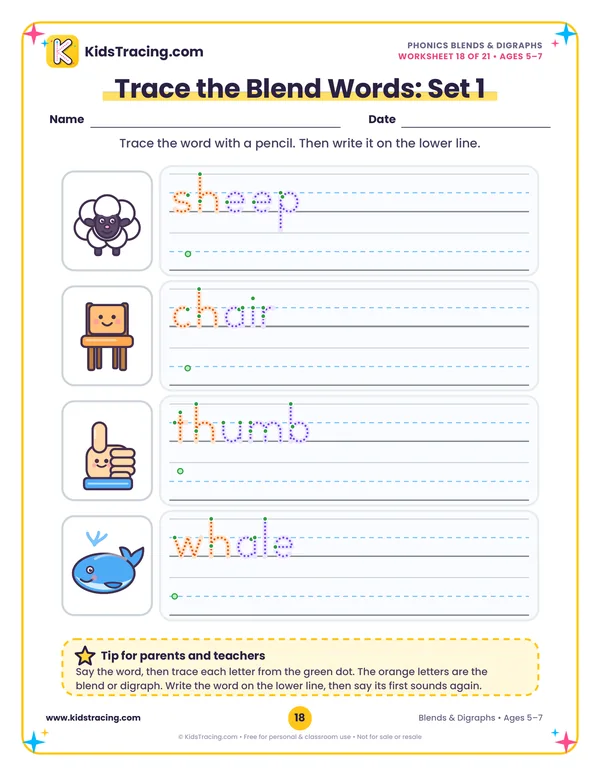
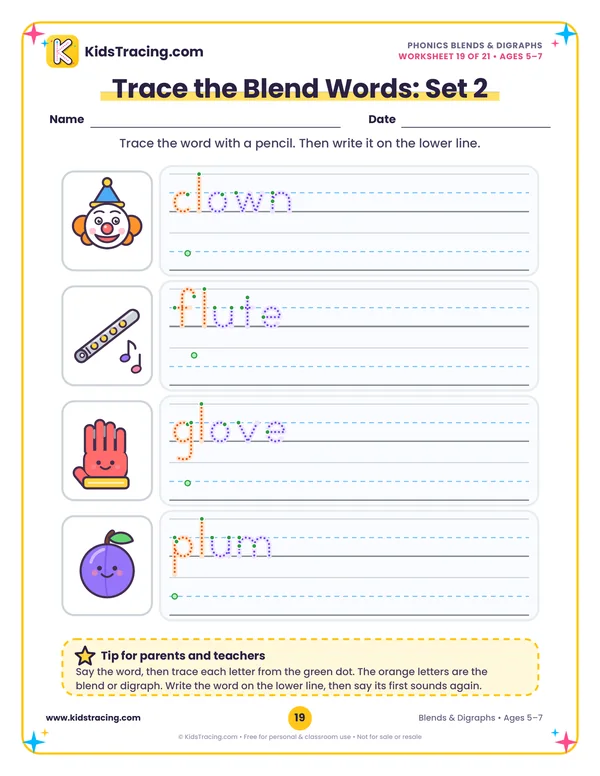
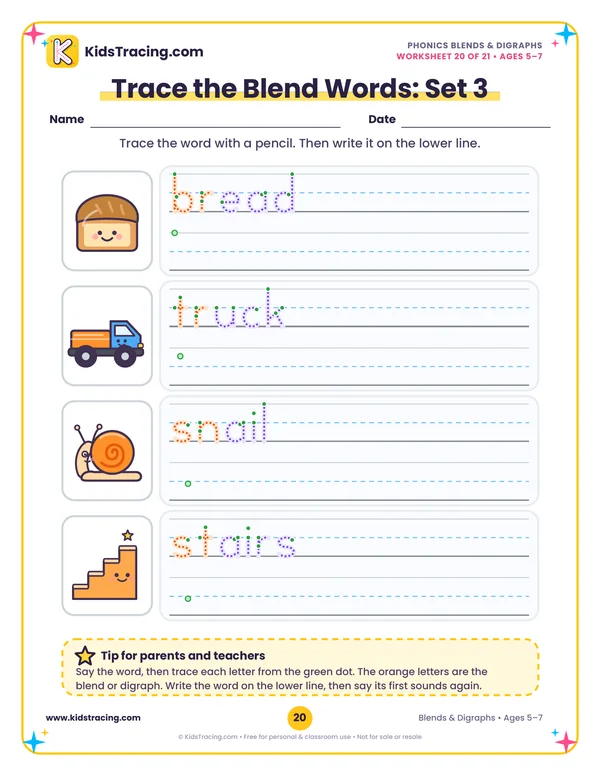
Twenty-one finished pages for the four digraphs (sh, ch, th, wh) and 19 blends (L-blends, R-blends and S-blends): a chart, trace and circle pages, matching, circle the beginning blend, write the missing blend, cut and paste sorting, shadow matching, blend word tracing and a word search. Answer keys are included where they are needed.
Download all, US Letter PDF (all 21 blends and digraphs worksheets)Download all, A4 PDF (all 21 blends and digraphs worksheets)All answer keys, US LetterAll answer keys, A4
Show 17 more worksheetsShow fewer worksheets
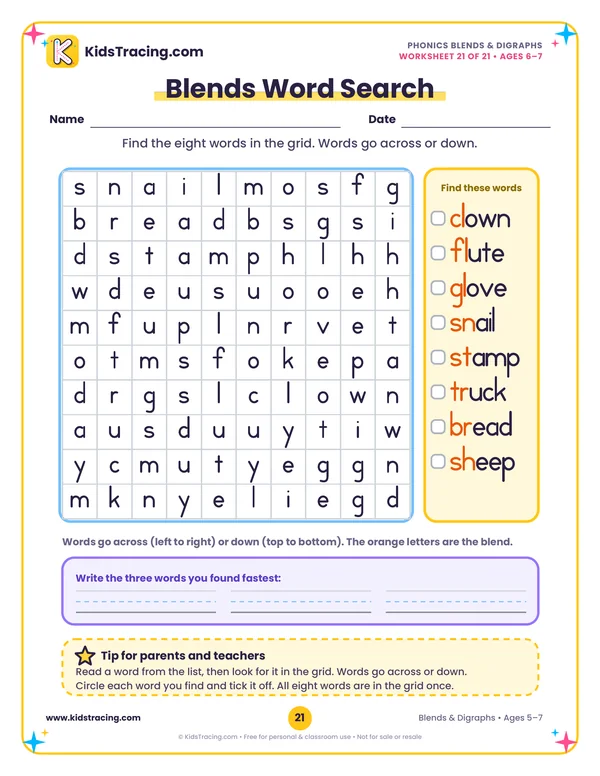
Start with beginning sounds, then try CVC words and rhyming words. Read the CVC words list for short vowel practice.
Free for personal, home and classroom use. Not for sale or resale.
Free printable workbooks
Ready-made PDF books on the same skill, to print in a planned order.
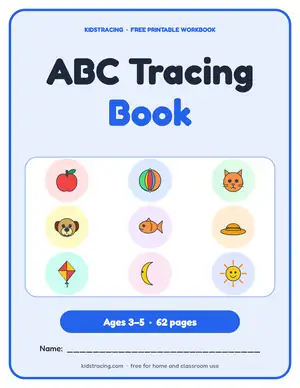
ABC Tracing Book
Every letter A to Z with numbered stroke arrows, a picture to color and a word to trace.
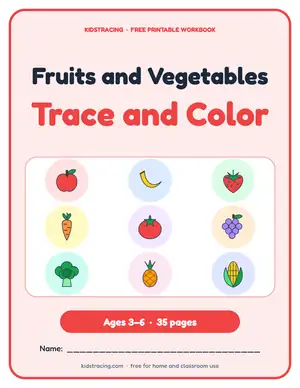
Fruits and Vegetables Tracing and Coloring Book
Color 26 fruits and vegetables, trace each word and write it alone, then review with matching games.
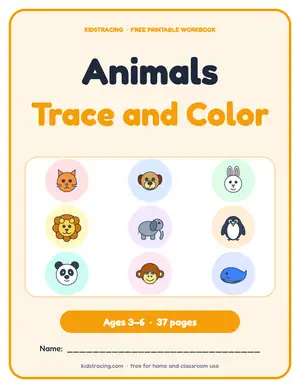
Animals Tracing and Coloring Book
Color 28 animals from the farm, the garden and the wild, trace each name and write it alone.
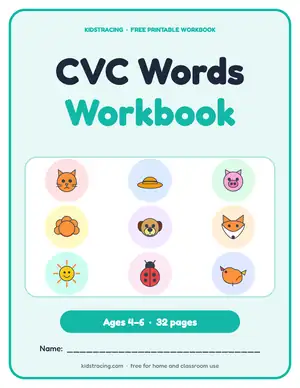
CVC Words Workbook
Read, build, trace and write short a, e, i, o and u words with pictures, sound boxes and sentences.
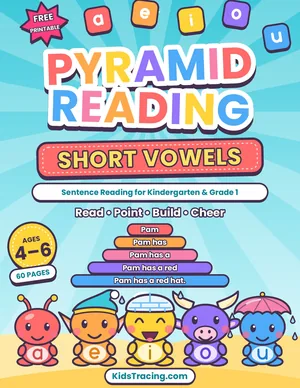
Pyramid Reading: Short Vowels
Read 50 short vowel sentences one word at a time, with five vowel friends, a tracker and a certificate.
How phonics skills build
Early reading grows step by step. Children first learn to hear the sounds in spoken words, then connect them to letters, then blend them into words. Beginning sounds links the first sound of a word to its letter. Missing letters and alphabetical order build confidence with the alphabet itself. CVC words let children blend three sounds into real words, and syllable counting trains them to hear the beats inside longer words.
How the worksheets work
Every phonics tool creates a new set of questions each time you press Generate new worksheet, so one tool can produce weeks of practice. Each worksheet can include a separate answer key page, which you can print on its own for the teacher or parent. Questions use original simple pictures and common words suited to children aged four to seven.
Where to start
Most children begin with beginning sounds and the alphabet, move to CVC words with short a, then add the other short vowels. Syllable counting and alphabetical order fit in once children can read a few simple words.
Phonics words in plain language
- A phoneme is a single sound, such as /b/ or /sh/.
- A grapheme is the letter or letters that spell a sound.
- Blending means pushing sounds together to read a word: /c/ /a/ /t/ makes cat.
- Segmenting means pulling a word apart into its sounds to spell it.
Keep it playful
Phonics works best in short, cheerful sessions. Say the sound, not the letter name, point to the picture and let your child guess. If an activity feels too hard, switch to an easier level and come back later.
Browse by age: Preschool Worksheets · Kindergarten Worksheets
Want the whole phonics path in order?
The Kindergarten year of our free Preschool and Kindergarten Curriculum teaches it week by week: letter sounds, short vowels, digraphs, blends, magic e and vowel teams, with twelve decodable readers. When your child can blend, Pyramid Reading: Short Vowels turns short words into 50 short sentences.
Frequently asked questions
At what age should children start phonics?
Playing with sounds, such as rhymes and first sounds, can start at three or four. Formal phonics usually begins in kindergarten, at about age five.
Do the phonics worksheets include answer keys?
Yes. Every phonics tool can add a separate answer key page, which you can print on its own.
Should my child learn letter names or letter sounds first?
Both help. Most phonics programs teach the sounds alongside the letter shapes, and the letter names follow naturally through songs, books and everyday use.
How do I know if a worksheet is too hard?
If your child gets many answers wrong or loses interest, move to an easier level or choose fewer letters. When most answers are right, try a harder level.
Are there ready-made blends and digraphs worksheets?
Yes. The ready-made section on this page has 21 printable blends and digraphs worksheets for ages 5 to 7 in US Letter and A4, with answer keys where they are needed.
What is the difference between a digraph and a blend?
A digraph is two letters that make one new sound, such as sh or ch. In a blend you hear both sounds, such as bl or st.