Preschool Tracing Sheets for 4-Year-Olds (Pre-K Age 4)
Published by Hasnat N, Founder · November 22, 2026 · 10 min read
Quick answer: Preschool tracing sheets for 4-year-olds are dotted-line practice pages (lines, shapes, letters and numbers) that build pencil control and letter formation before real writing. At age 4, keep sessions to about 10 minutes, start with lines and shapes, then move to letters and numbers, and print everything free in US Letter or A4, with no sign-up.
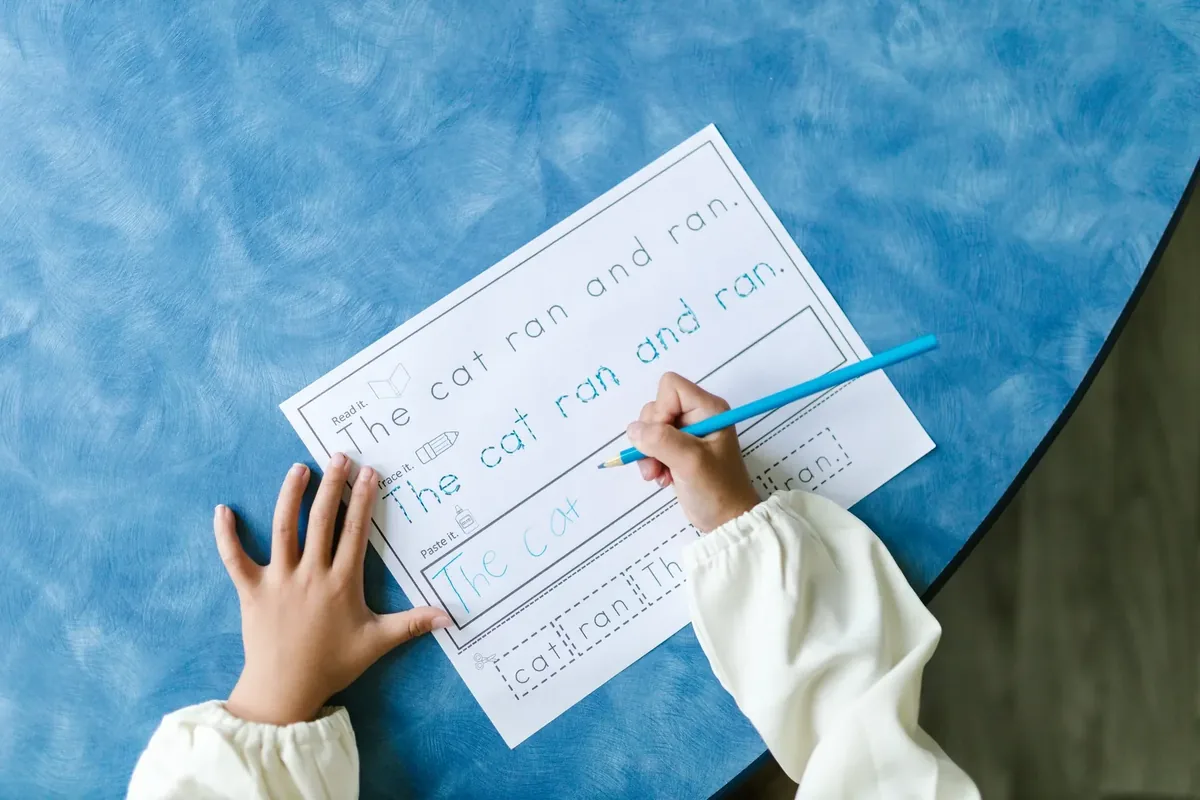
Four is a good age to start tracing. Most 4-year-olds can hold a crayon, follow a dotted line on purpose, and copy a circle or a cross, but they are not ready for long writing sessions or neat, small letters. That is exactly what preschool tracing sheets are for: short, successful practice that turns wobbly lines into steady pencil control.
The worksheets linked in this guide are free printable tracing worksheets for preschool, made for pre-K age 4. You can print one page at a time or a whole set, in US Letter or A4, with no sign-up. Whether you search for them as prek worksheets or pre-k worksheets, the idea is the same: a page your child can finish in a few happy minutes.
This guide explains what 4-year-olds should trace first, how long to practice, a simple weekly plan, and what to do when tracing gets boring, plus cut-and-paste pages and a realistic note on homework for kindergarteners.
What are preschool tracing sheets?
Preschool tracing sheets are practice pages with dotted or dashed lines for a child to follow with a pencil or crayon. Each sheet shows a path (a straight line, a curve, a shape, a letter or a number) with a clear starting point, and the child traces over it. The dotted line does the teaching: it shows where the pencil goes, so the child can practice the movement before they have to remember the shape.
At age 4, tracing sheets for 4 year olds usually cover four kinds of pages, in this order:
- Lines: vertical, horizontal, slanted, zigzag and wavy lines. The foundation of all writing.
- Shapes: circles, squares, triangles and rectangles. A circle is the hardest shape at this age because it needs one smooth, closed movement.
- Letters: big capital letters first, then small letters, one letter at a time.
- Numbers: numbers 1 to 10, traced after counting the pictures beside them.
Tracing teaches three things at once. First, pencil control: the hand learns to move slowly and steadily instead of scribbling fast. Second, letter and number formation: children learn where each stroke starts and which direction it goes. Third, focus: following a line to the end is one of the first times a child has to keep going at something until it is finished. Our pre-writing lines and shapes pages are the gentlest place to start, and our guide to pre-writing activities for preschoolers has 15 screen-free ideas that build the same skills through play.
What should a 4-year-old trace first?
Start where your child feels confident, not where the alphabet starts. A child who can trace a straight line happily will enjoy a curve next; a child pushed straight to small letters will get frustrated and refuse the pencil. Use this order:
- Lines first (1–2 weeks). Straight lines down and across, then curves, zigzags and waves. Try the preschool line tracing pages, each one practices a single stroke.
- Shapes next. Circles, squares and triangles. Shape tracing is the bridge between lines and letters: a circle plus a straight line makes a "b", a curve plus a line makes a "h". Our shape tracing pages keep the shapes big, which matters at age 4.
- Capital letters. Start with the letters in your child's name, then easy straight-line letters like L, T, H, E and F. The letter formation worksheets let you print one letter at a time, with a green start dot on every stroke.
- Numbers 1 to 10. Count first, trace second. The preschool number tracing pages pair each number with pictures to count, so the number means something before the pencil moves.
- Their name. Name writing is the most motivating tracing there is. Our name tracing generator makes a personalized sheet with any name. Most 4-year-olds will trace their own name far longer than any other page.
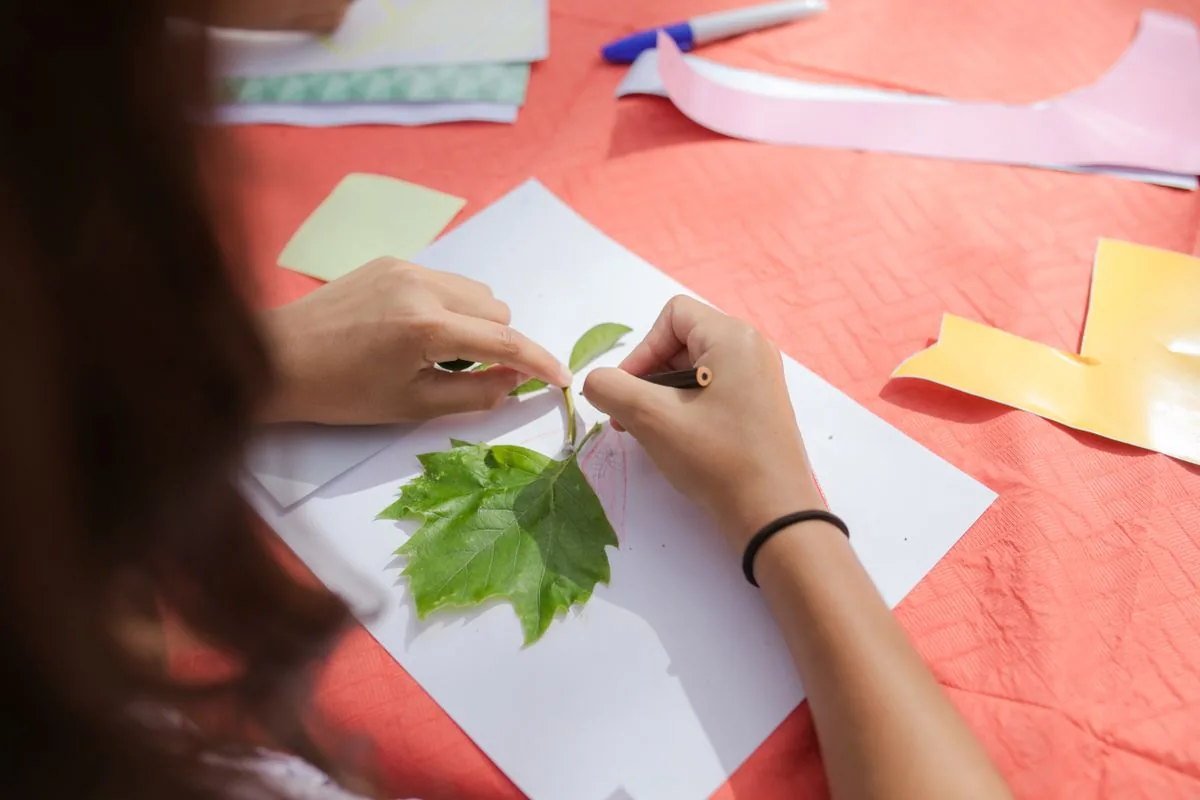
If your child is not ready for a pencil yet, that is normal too. Check the handwriting readiness checklist: ten signs that show whether to start with tracing or to build hand strength first with playdough, Lego and tearing paper.
How to use preschool writing sheets at age 4
Preschool writing sheets work best as a short, happy routine, not a lesson. Aim for about ten minutes, three or four times a week. Some days your child will ask for more; some days five minutes is enough. Stop while they are still enjoying it. Our guide to how long preschoolers should practice tracing explains the timing by age in full.
Try this five-step routine with any sheet:
- Look first. Point to the big shape or letter and name it together: "This is a circle. It goes all the way around."
- Trace in the air. Draw it big in the air with a finger, starting at the top. Air-tracing first means fewer mistakes on paper.
- Follow the dots. Start at the green dot and follow the arrows. One slow, careful line teaches more than a whole row rushed through.
- Trace, then try alone. After the dotted rows, try the shape or letter on the blank line without help. Wobbly is fine.
- Say it out loud. Say the letter name and sound, or count the number, while tracing. The sheet then teaches early reading and math too, not just handwriting.
A short crayon or a small pencil helps young children hold the tool correctly, because there is less to grip. A tripod grip (thumb and two fingers) is the goal, but do not force it before your child is ready. If the grip is still wobbly, go back to lines and shapes for a week; the letters will wait. For more on this, see our alphabet tracing worksheets guide, which covers the same routine for letters A to Z.
Want pages ready to print? This free workbook starts with lines and shapes, one stroke per page.
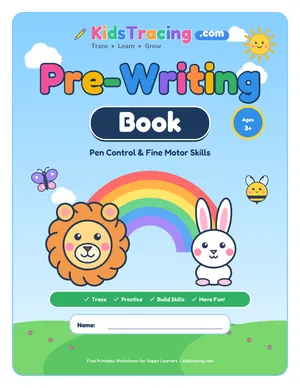
Pre-Writing Lines and Shapes Book
A 21-page workbook of lines and shapes for ages 3 to 5.
Open the free workbookAlso free: Preschool Line Tracing.
Free printable tracing worksheets for preschool: what to print first
You do not need a whole workbook to start. Print this starter set, one page per day, and see which kind your child enjoys most. These are free printable tracing worksheets for preschool that parents and teachers can use at home or in class:
- Day 1, lines: preschool line tracing (straight lines down and across).
- Day 2, shapes: shape tracing (circle and square).
- Day 3, a letter: letter formation, the first letter of your child's name.
- Day 4, a number: preschool number tracing (numbers 1 to 5).
- Day 5, their name: name tracing, personalized.
All of these are free to print in US Letter or A4, with no sign-up, from the free worksheets collection. If your child loves the starter set, the next step is a full book: the Pre-Writing Lines and Shapes Book (21 pages, ages 3–5) or My ABC Tracing Workbook for letters. Both are free pre-K workbooks in PDF form. Print a few pages today and keep the rest for later.
Preschool writing practice sheets: a simple weekly plan
Preschool writing practice sheets work better as a small weekly habit than as a big weekend session. This plan uses about ten minutes a day, four days a week, and mixes tracing with one non-writing activity so the pencil never becomes a chore. It is built for pre-K age 4; for a full subject plan, see our preschool and KG English and math worksheets guide.
| Day | Tracing (10 minutes) | Play after |
|---|---|---|
| Monday | Lines: straight and wavy | Draw the lines in sand or flour |
| Tuesday | Shapes: circle and square | Find circles and squares around the house |
| Wednesday | One capital letter and its small letter | Letter hunt in a picture book |
| Thursday | Numbers 1 to 5, with counting | Count stairs, spoons or toy cars |
| Friday | Free choice: their favorite page again | Cut-and-paste page (see below) |
Repeat the same letter or number for two or three days before moving on. Repetition is the point at this age: the second day is always steadier than the first, and that visible improvement is what keeps a 4-year-old coming back. If a page causes tears, drop back a step (from letters to shapes, or from shapes to lines) for a week. Progress at age 4 is rarely a straight line, and a week back is not a week lost.
Ready for letters and numbers? These free workbooks take your child through both, a little at a time.
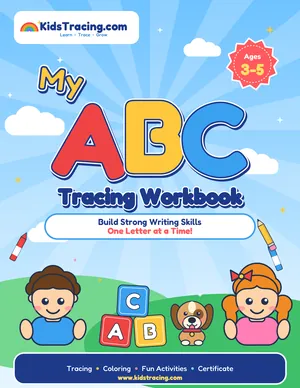
My ABC Tracing Workbook
A 38-page picture alphabet workbook for tracing letters A to Z.
Open the free workbook
Number Tracing Book
A 32-page workbook for numbers 1 to 20, with counting.
Open the free workbookFive easy games with tracing sheets for 4 year olds
The same tracing sheet can be a game board. Try one of these after the tracing is done:
- Rainbow write. Trace the same letter three times, each time in a different color, tracing over the last color. Three practices in one.
- Mystery shape. Trace a shape on your child's back with your finger and ask them to guess which one it is. Then swap roles.
- Shape hunt. After tracing a triangle, find five triangles in the room. Windows, roofs and sandwiches all count.
- Trace and color. Trace the word, then color the picture beside it (cat, sun, ball). Our word tracing pages are made for exactly this.
- Floor letters. Lay traced letter sheets on the floor. Call out a letter and your child hops to it, or call out its sound for an extra challenge.
For more game-like practice, try the beginning sounds worksheets for preschool, which turn letter recognition into a matching game.
Preschool cut and paste printables: a break from tracing
Not every practice page needs a pencil. Preschool cut and paste printables build the same hand strength as tracing (holding paper steady with one hand while the other cuts), and they feel like play, not school. They are the best thing to offer on a day your child refuses to write: the hands keep learning while the pencil takes a break.
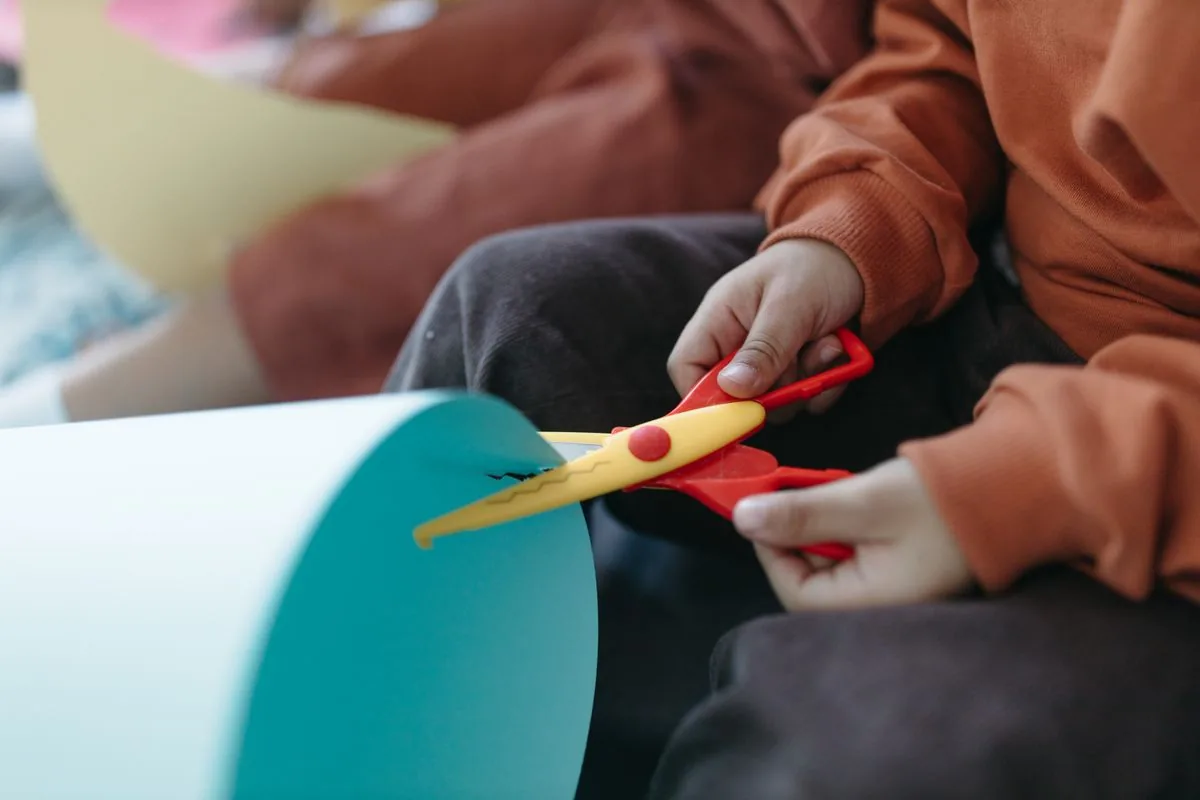
Try the cut-and-play printables for simple cut-and-stick scenes, or the scissor skills pages for straight and curved cutting lines. The Scissor Skills Cutting Practice Book collects them into one free workbook. A few safety notes: use child-safe scissors, sit with your child while they cut, and start with thick lines on thick paper. Thin paper tears, and tearing feels like failing.
Cutting and tracing support each other. A child who can cut along a curved line can usually trace one too, and a child who can trace a circle can cut one out. Alternate them through the week and both skills improve faster than either would alone.
A pencil break that still builds hand strength: cutting practice.
Scissor Skills Cutting Practice Book
A 29-page workbook of cutting lines and shapes.
Open the free workbookAlso free: Cut-and-Play Printables.
Homework for kindergarteners: how much is enough at age 4?
Parents often ask about homework for kindergarteners when their 4-year-old starts pre-K. The honest answer is: very little, and none of it should look like school homework. At age 4, ten minutes of tracing three or four times a week is plenty. Reading together every day matters more than any worksheet, and free play (building, drawing, running, pretending) is where most learning at this age actually happens.
If your child's pre-K sends work home, keep it short and positive: one tracing sheet, then stop, even if the sheet is not finished. A finished half-sheet with a smile teaches more than a finished full sheet with tears. And if there is no homework at all, that is fine too. The tracing sheets on this page, used a few times a week, already cover the pencil skills kindergarten expects. Our guide to how long a child should study at home gives realistic times by age, from preschool to first grade.
What comes after preschool tracing sheets?
Once your child traces lines, shapes and capital letters confidently, the next step is connecting letters to sounds. Beginning sounds worksheets ask children to match a letter to the picture that starts with its sound, like B for ball and S for sun. After that come CVC words: short words like cat, pen and sun that children can sound out letter by letter.
Name writing is a wonderful goal to work toward at the same time: a child who can write their own name has already mastered several letters. Our guide on how to teach a child to write their name walks through the steps. For next steps by age, browse the preschool worksheets and kindergarten worksheets collections. When your child is ready for more writing, the handwriting pages take over from tracing.
Keep reading
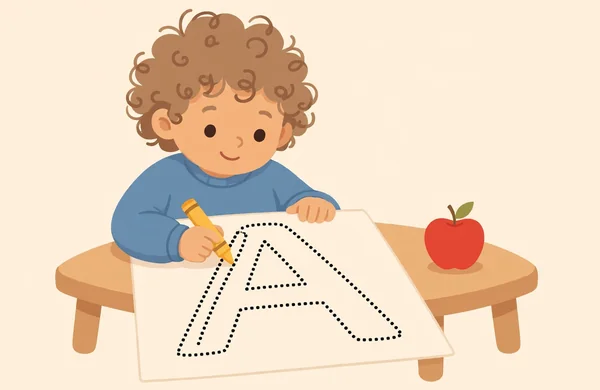
Letter Tracing Worksheets A-Z: Free Printable PDF
Free printable letter tracing worksheets A-Z for preschool, pre-K and kindergarten. Trace...
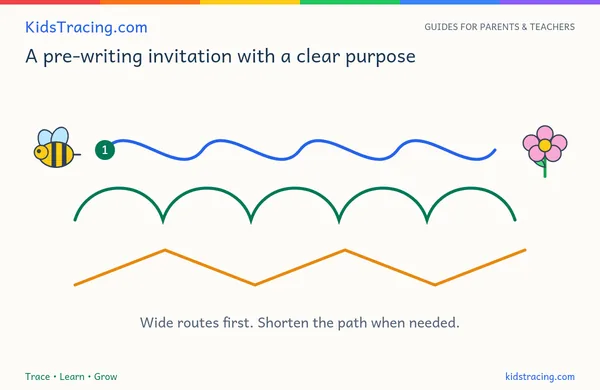
Pre-Writing Activities for Preschoolers: 15 Fun Ideas
Explore practical preschool pre-writing activities, sample play sessions, materials,...
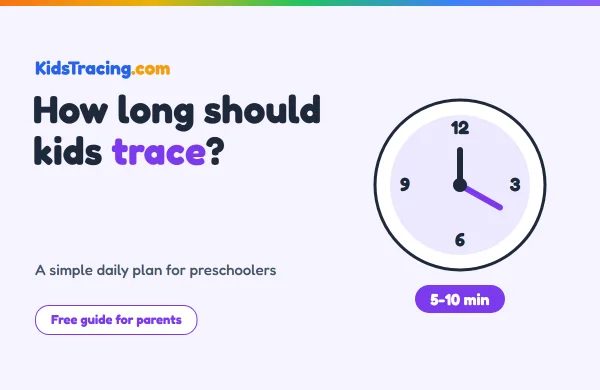
How Long Should Preschoolers Practice Tracing? A Daily Plan
How long should a preschooler trace each day? Get simple time guides by age, a 10-minute...
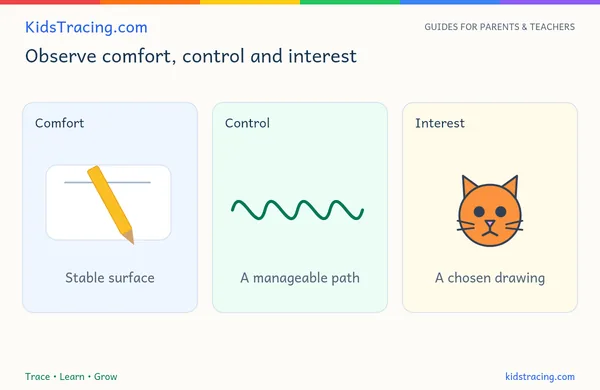
Handwriting Readiness Checklist: Is Your Child Ready?
Use practical handwriting readiness observations to notice comfort, control and interest,...
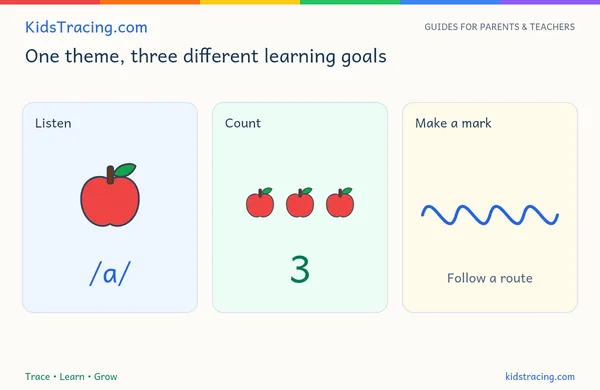
English and Math Worksheets for Preschool and KG (Ages 3-6)
Choose preschool and kindergarten English and math worksheets by skill, with worked lessons,...
Photo credits
The photos in this guide are free stock photos from Pexels (free to use, no attribution required, credited here anyway): the hero photo by RDNE Stock project, the leaf-tracing photo by RDNE Stock project, and the scissors photo by Anastasia Shuraeva.