Free Printable Reward Charts for Kids: 20 Sticker Charts (PDF)
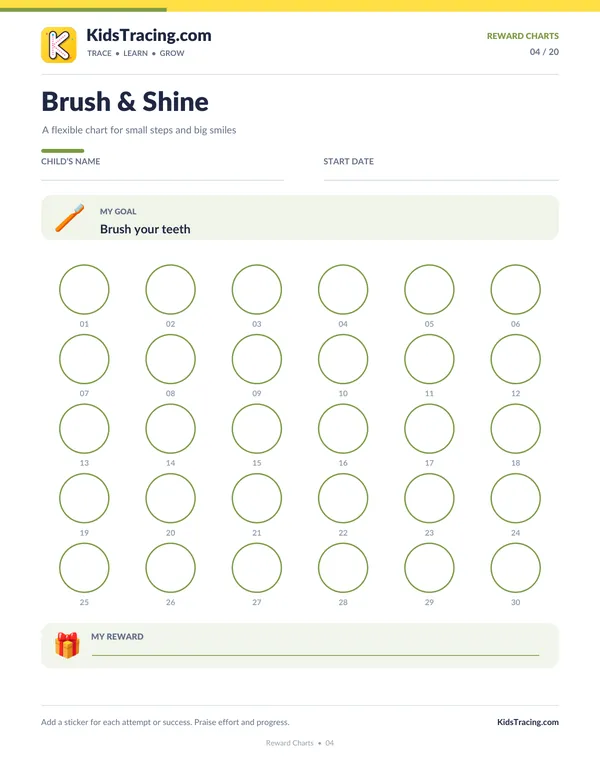
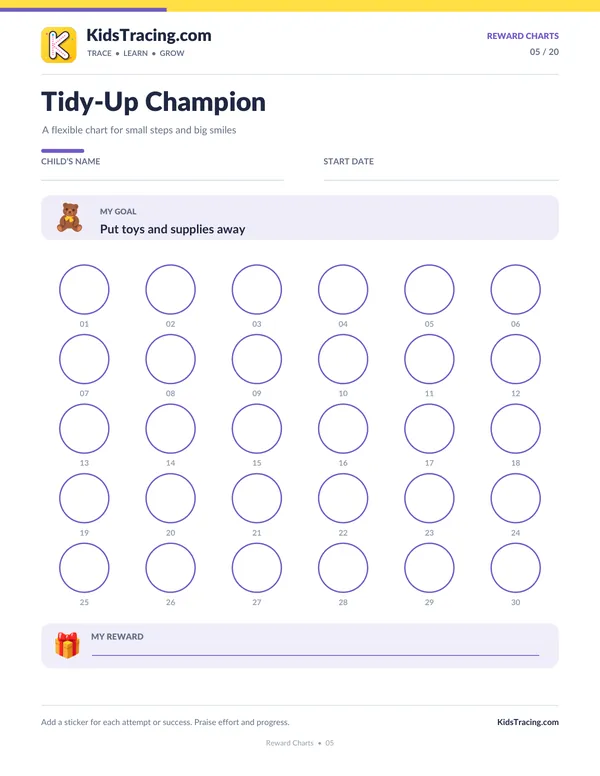
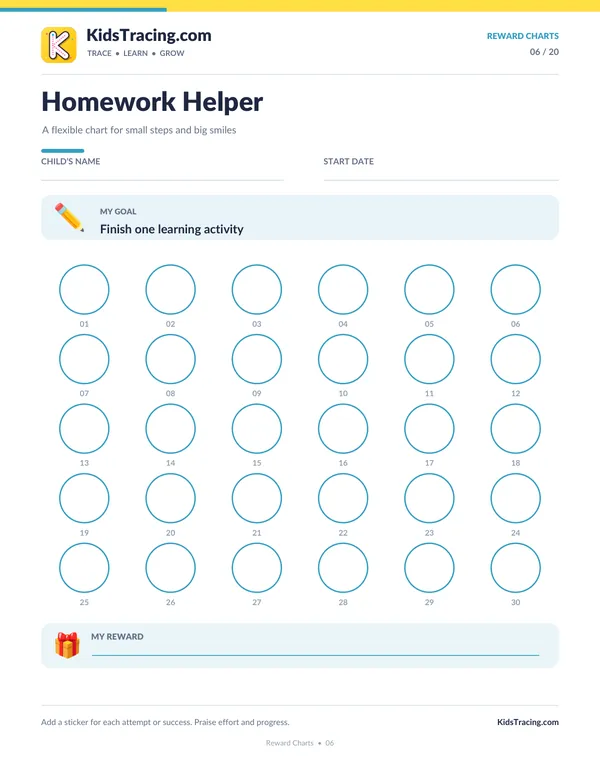
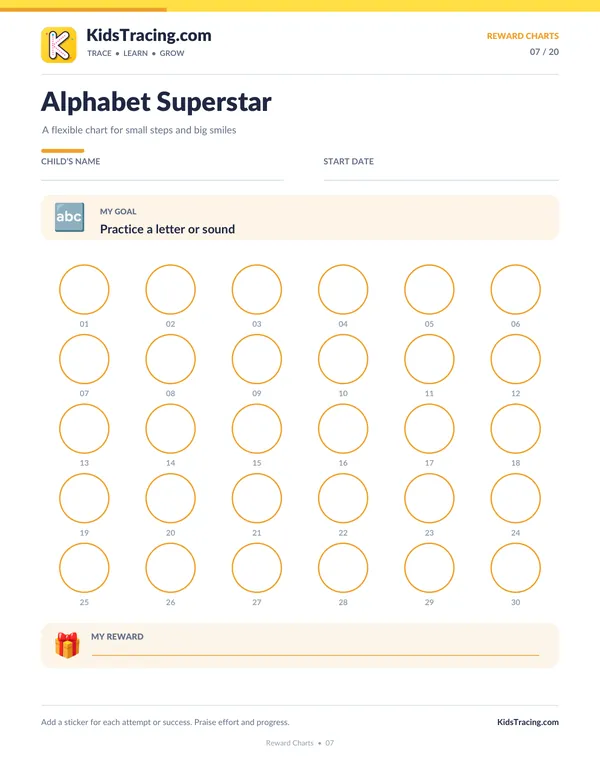
Twenty free printable reward charts, each built around one small goal: read a story, brush your teeth, tidy up, share, try a calming step. Every chart has 30 circles for stickers or stamps, a place for the child’s name and start date, and a box to write the reward. Download one chart in US Letter or A4, or take all twenty.
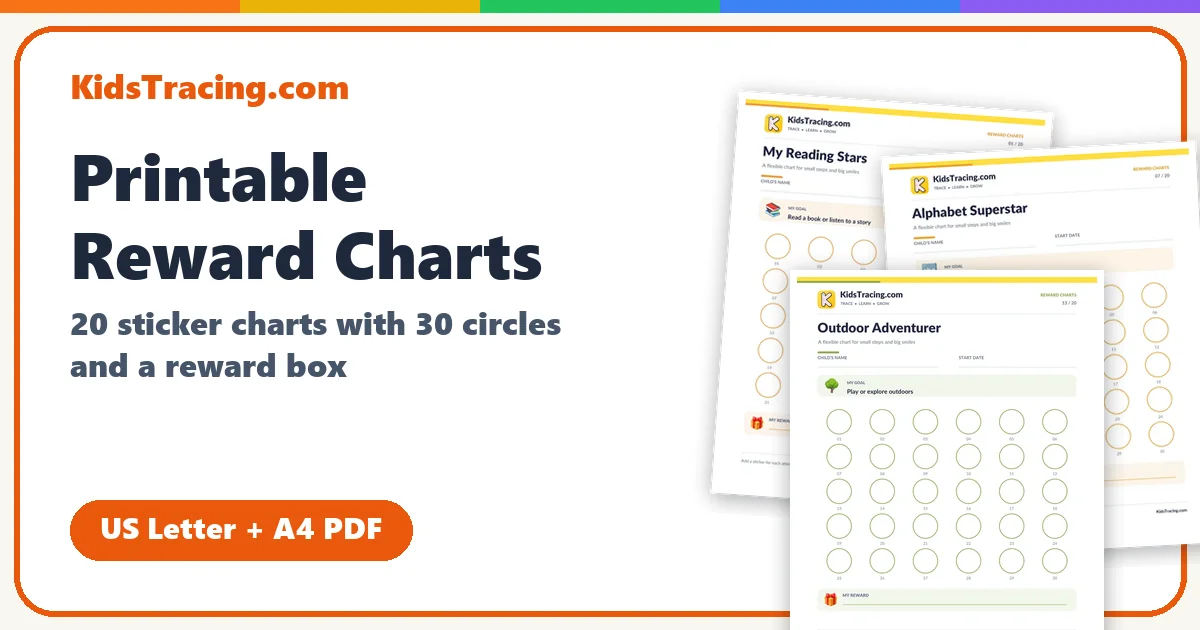
The 20 printable reward charts
Each chart has one goal printed in the “My goal” box. Pick the goal your child is working on, print the chart and add a sticker for each attempt or success.
Download all 20, US Letter PDF · 286 KB (all 20 reward charts, one page each)Download all 20, A4 PDF · 287 KB (all 20 reward charts, one page each)ZIP with every chart ZIP · 4.4 MB (both paper sizes)
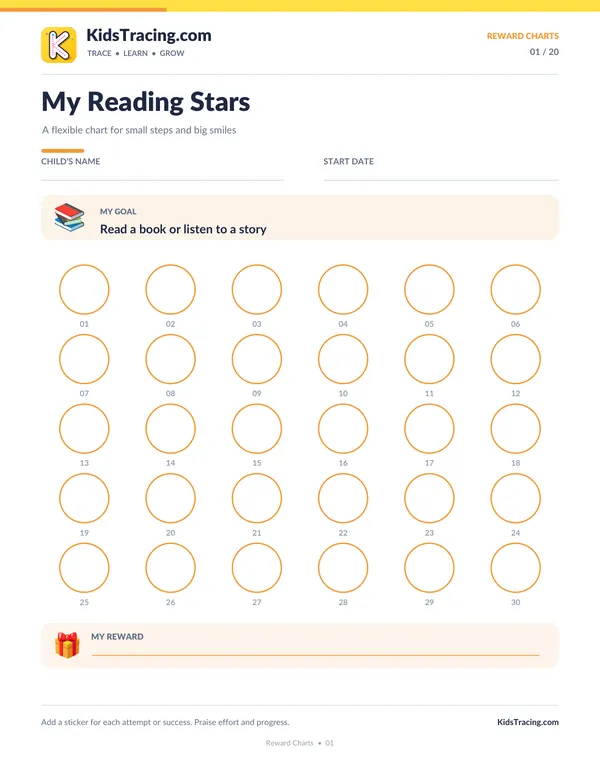
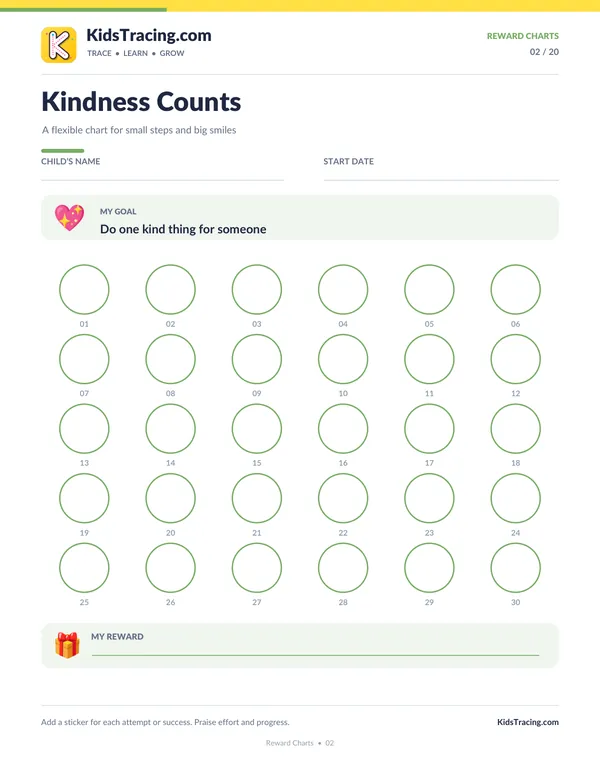
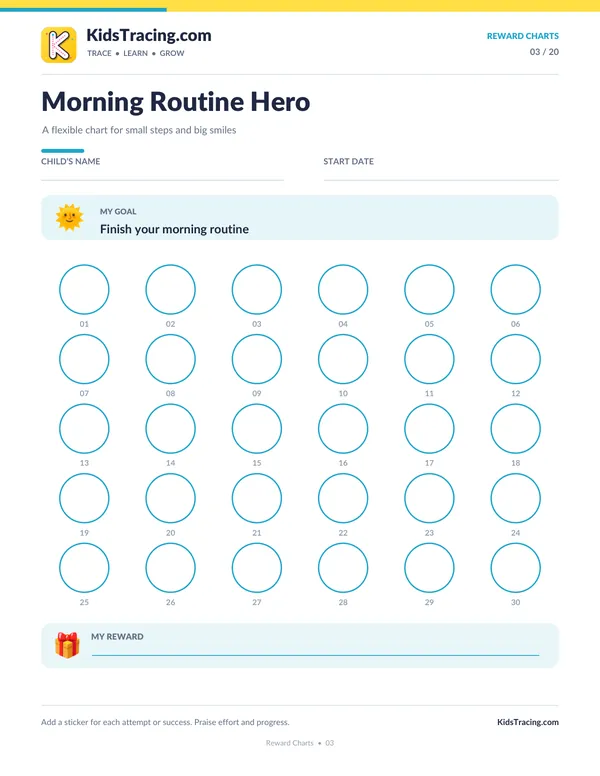
Free for personal, home and classroom use. Not for sale or resale.
How to use a printable reward chart
A reward chart, also called a sticker chart, turns a small goal into something a child can see. Each circle is one day, one try or one success, and the child adds a sticker, a stamp or a color when it happens.
- Choose one goal. Pick one small, clear goal from the list below, such as brushing teeth or putting toys away. One goal at a time is easier for a child to understand than a long list.
- Fill in the top of the chart. Write the child’s name and the start date. Let your child decorate the title if they like.
- Decide the reward together. Talk about what the celebration will be and write it in the “My reward” box.
- Add a sticker for each attempt or success. The chart reminds you to praise effort and progress, not only perfect results.
- Celebrate when the circles are full. Then print a new chart for the next goal, or keep going with the same one.
Which reward chart should I choose?
The twenty charts are grouped here by the kind of goal. Each one has the same simple layout, so you can switch charts as your child’s goals change.
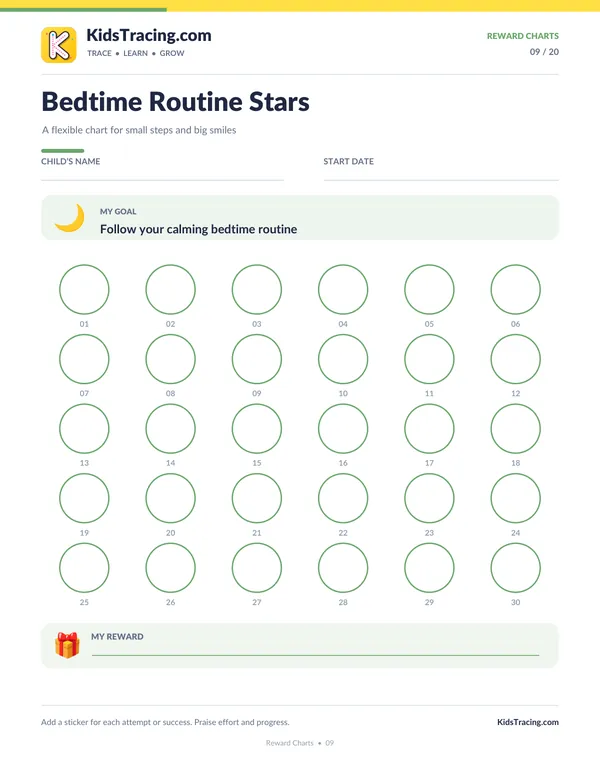
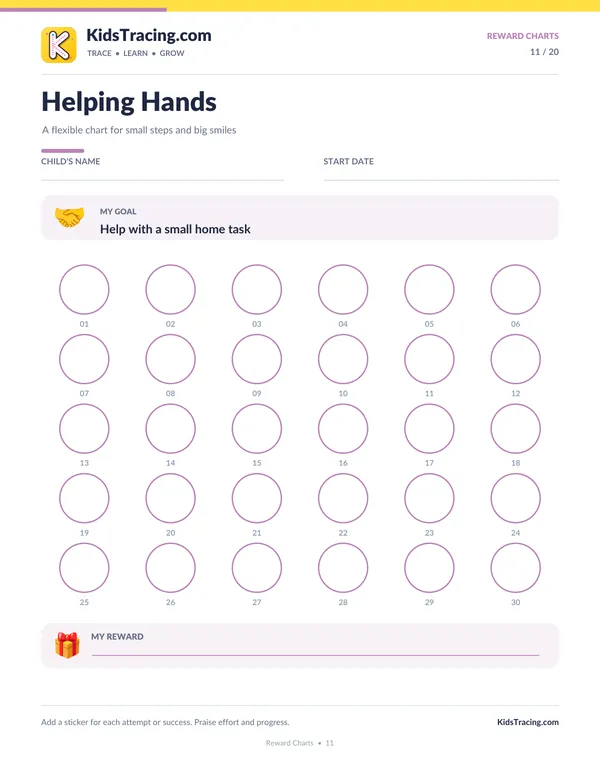
- Daily routines: Morning Routine Hero, Brush & Shine, Bedtime Routine Stars, Tidy-Up Champion and Helping Hands.
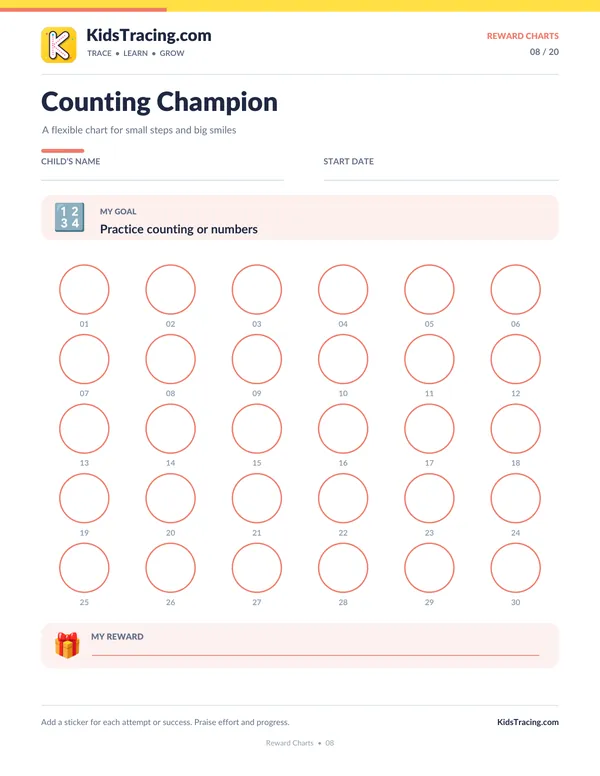
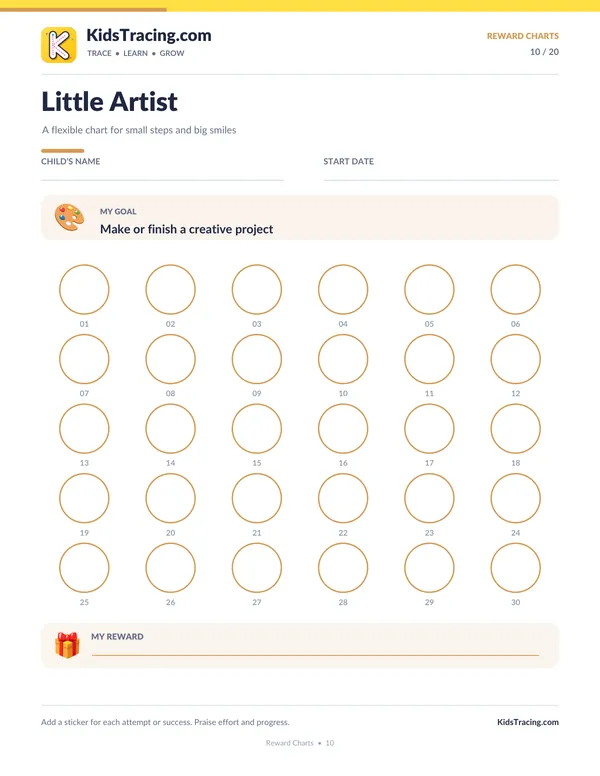
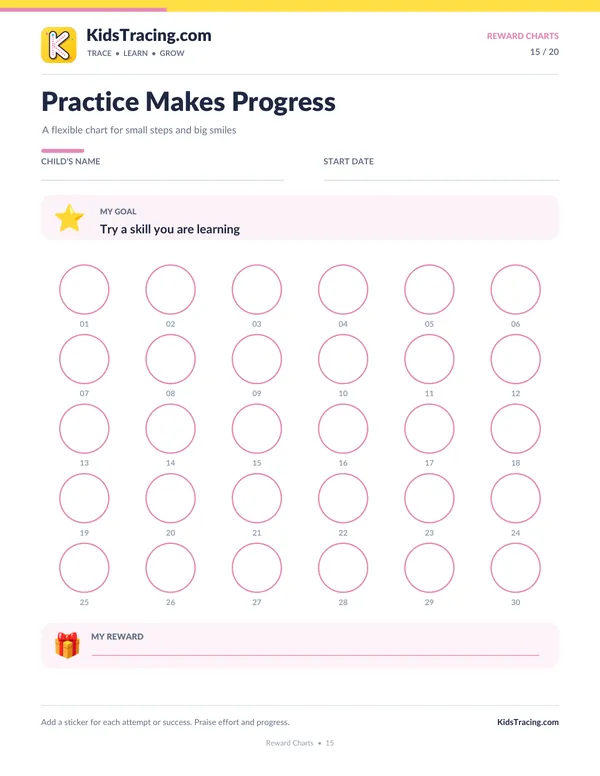
- Learning habits: My Reading Stars, Homework Helper, Alphabet Superstar, Counting Champion, Practice Makes Progress and Little Artist.
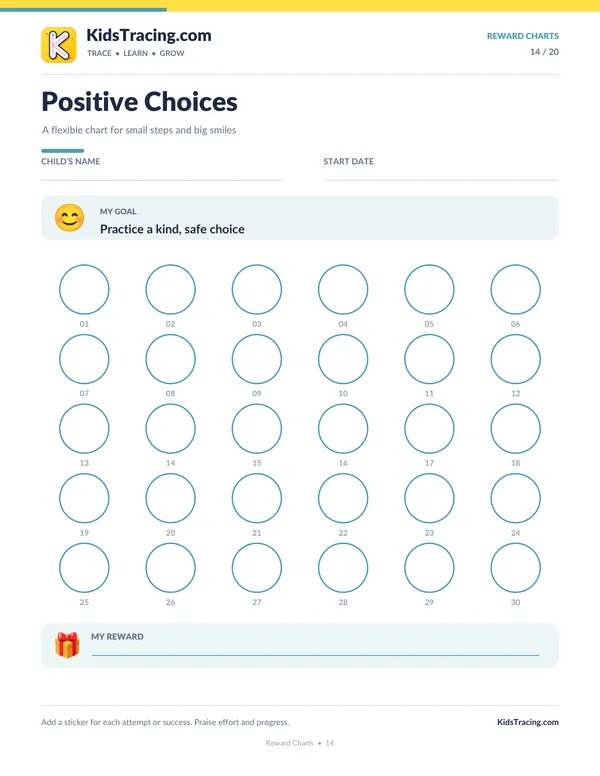
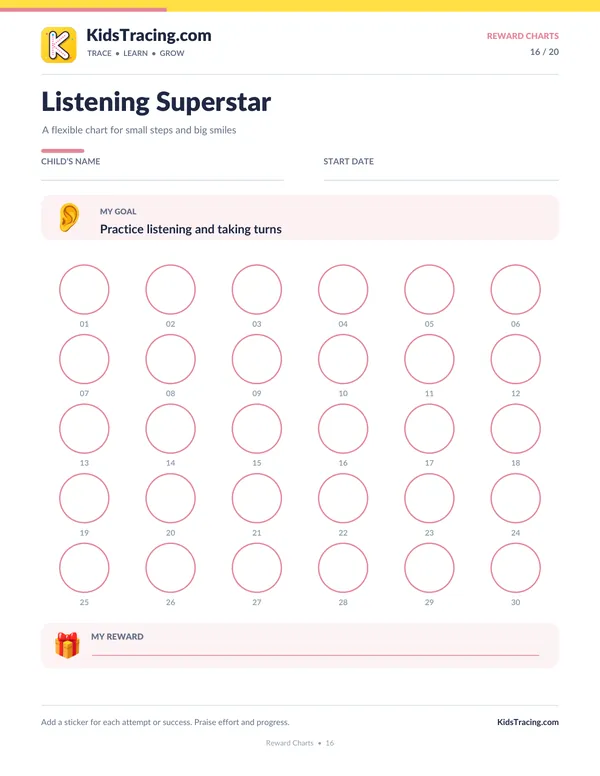
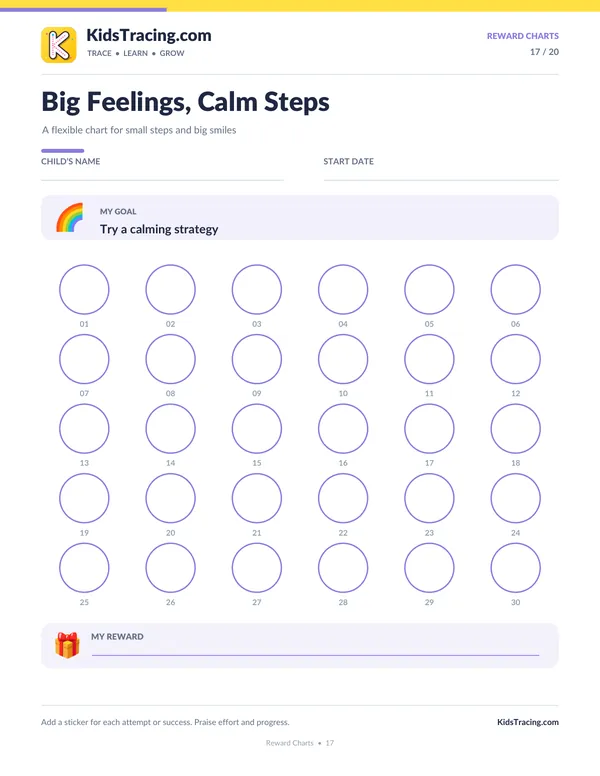
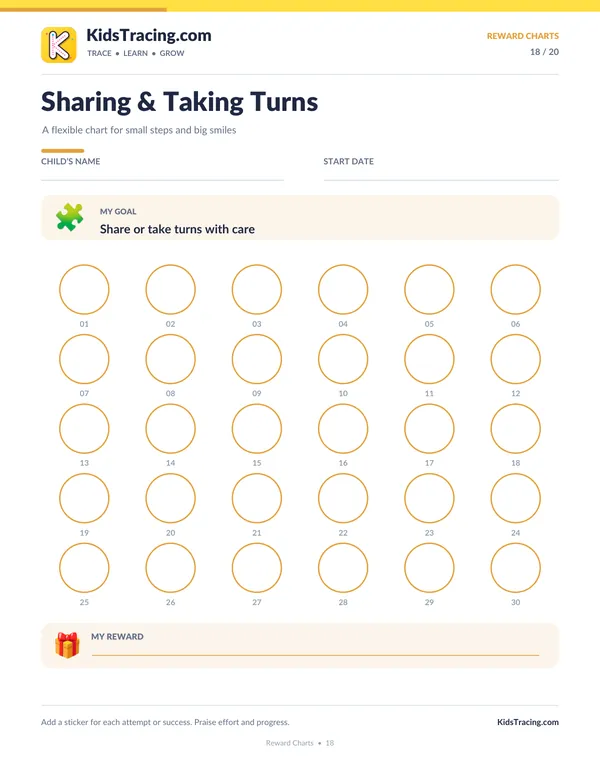
- Kindness and behavior: Kindness Counts, Positive Choices, Listening Superstar, Sharing & Taking Turns and Big Feelings, Calm Steps.
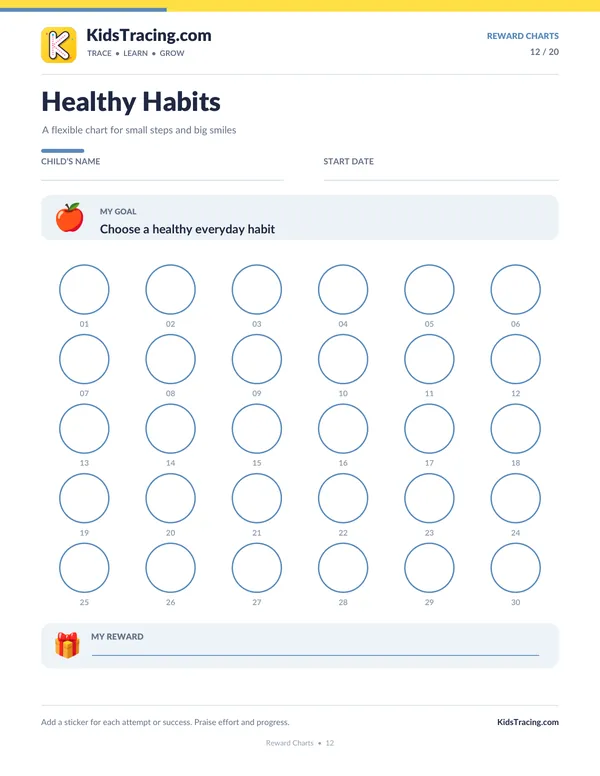
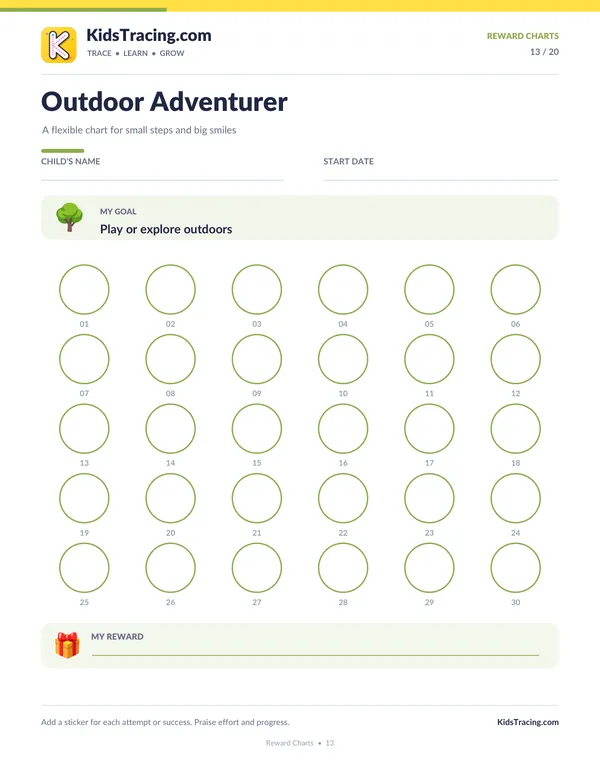
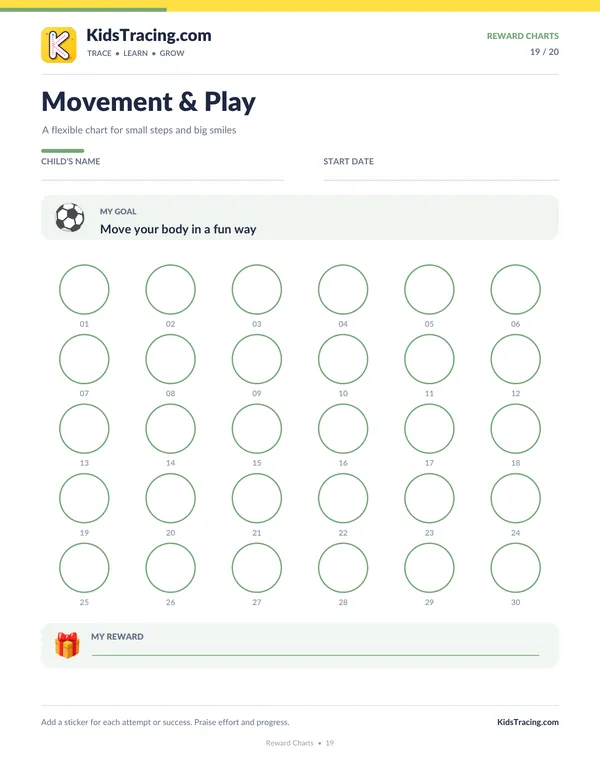
- Health and play: Healthy Habits, Outdoor Adventurer and Movement & Play.
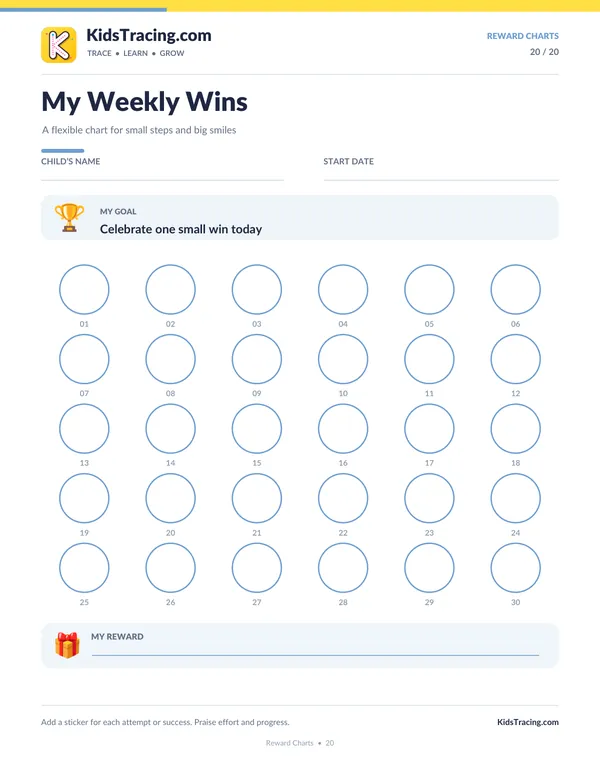
- Anything else: My Weekly Wins has a flexible goal, “Celebrate one small win today”, for any win you want to mark.
Reward ideas that do not cost money
A reward does not have to be a toy or a treat. Many families choose a shared activity, and some children are happy with the sticker and the praise alone. Ideas to write in the reward box:
- Choose the bedtime story or an extra story
- Pick a family game to play together
- A picnic on the living room floor or in the yard
- Ten minutes of one-to-one time doing something your child chooses
- Pick the song for the car ride
- Help cook a favorite meal
- A trip to the park or the library
Tips for keeping a reward chart positive
- Keep the goal small and specific. “Brush your teeth” is clearer than “be good”.
- Praise the effort. Say what you saw: “You put every block in the box by yourself.”
- Keep it friendly. The chart is there to celebrate progress. A missed day is just a day with no sticker, and tomorrow is a new circle.
- Put it where your child can see it, for example on the fridge or beside the bed, and keep the stickers within reach.
- Use it for a while, then let it go. When a habit feels natural, you can stop the chart or switch to a new goal.
Every child is different. If a goal feels very hard for your child, or you are worried about their development or behavior, talk with your child’s doctor or teacher.
Reward chart, sticker chart or behavior chart?
The three names describe nearly the same tool. A sticker chart uses stickers to track progress. A reward chart adds a reward at the end. A behavior chart tracks a behavior you want to see more of. These charts are all three: they have a goal, 30 circles for stickers and a reward box. They work for home routines and classroom habits, and they can double as a simple habit tracker.
Printing tips
- Print at 100% (Actual size). Use US Letter in the United States and Canada and A4 almost everywhere else.
- Plain paper is fine. For a chart you will use for weeks, print on thicker paper or put it in a clear sleeve.
- Each circle is about 0.7 inch (17 mm) across, so round stickers up to that size fit well. Stamps, dot markers and crayons work too. Our printable sticker sheets can be cut out and used on the charts.
- Have a chart ready for each child if you track more than one.
Credits and licences
Many of the pictures and icons in this set use Noto Emoji artwork by Google. The Noto emoji fonts are licensed under the SIL Open Font License 1.1, and most of the emoji images are licensed under the Apache License 2.0. The page layouts, text and KidsTracing logo are our own. These printables are free for personal, home and classroom use, and not for sale or resale.
Frequently asked questions
What is a reward chart?
A reward chart is a page where a child adds a sticker or mark each time they reach a small goal. When the circles are full, the child gets the reward you chose together. It makes progress visible and gives you a reason to praise effort.
How many circles are on each chart?
Each reward chart has 30 circles, numbered 1 to 30. You can use them as 30 days in a row, or as 30 attempts at the goal, whichever suits your child.
What age are these reward charts for?
The charts are simple enough for preschoolers to use with an adult and for older children to fill in themselves. Choose a goal that suits your child. A younger child may need a grown-up to help with the sticker and the praise.
Do I have to give a toy or treat as the reward?
No. The reward box can hold anything you and your child agree on, such as an extra story, a game or time together. Some children are happy with the stickers and the praise.
Can I use the charts in a classroom?
Yes. They are free for personal, home and classroom use. Teachers can print one chart per child for a goal such as listening, sharing or practicing a skill. Please do not sell or resell the files.
Which size should I print, US Letter or A4?
Use US Letter if you are in the United States or Canada, and A4 almost everywhere else. Every chart is available in both sizes.
What if my child misses a day?
Nothing is lost. The chart has numbered circles rather than calendar days, so you can simply continue with the next circle when the goal is met. Keep the tone friendly and pressure-free.
Can I print the same chart again?
Yes. Print as many copies as you need for your own children or students. When a chart is full, print a new one for the next round.
Related printables: reward coupons for the prize, potty training charts, 30-day challenges and activity passports. To practice writing the child’s name on the chart, try name tracing worksheets.