Animal Mazes for Kids: How to Choose, Solve and Print Them
Animal maze worksheets turn pencil practice into a small adventure. This guide explains how to choose the right difficulty, support children without solving puzzles for them, and use our free printable Animal Mazes Activity Book.
KidsTracing educational guide · Updated October 23, 2026 · Approximately 7-minute read
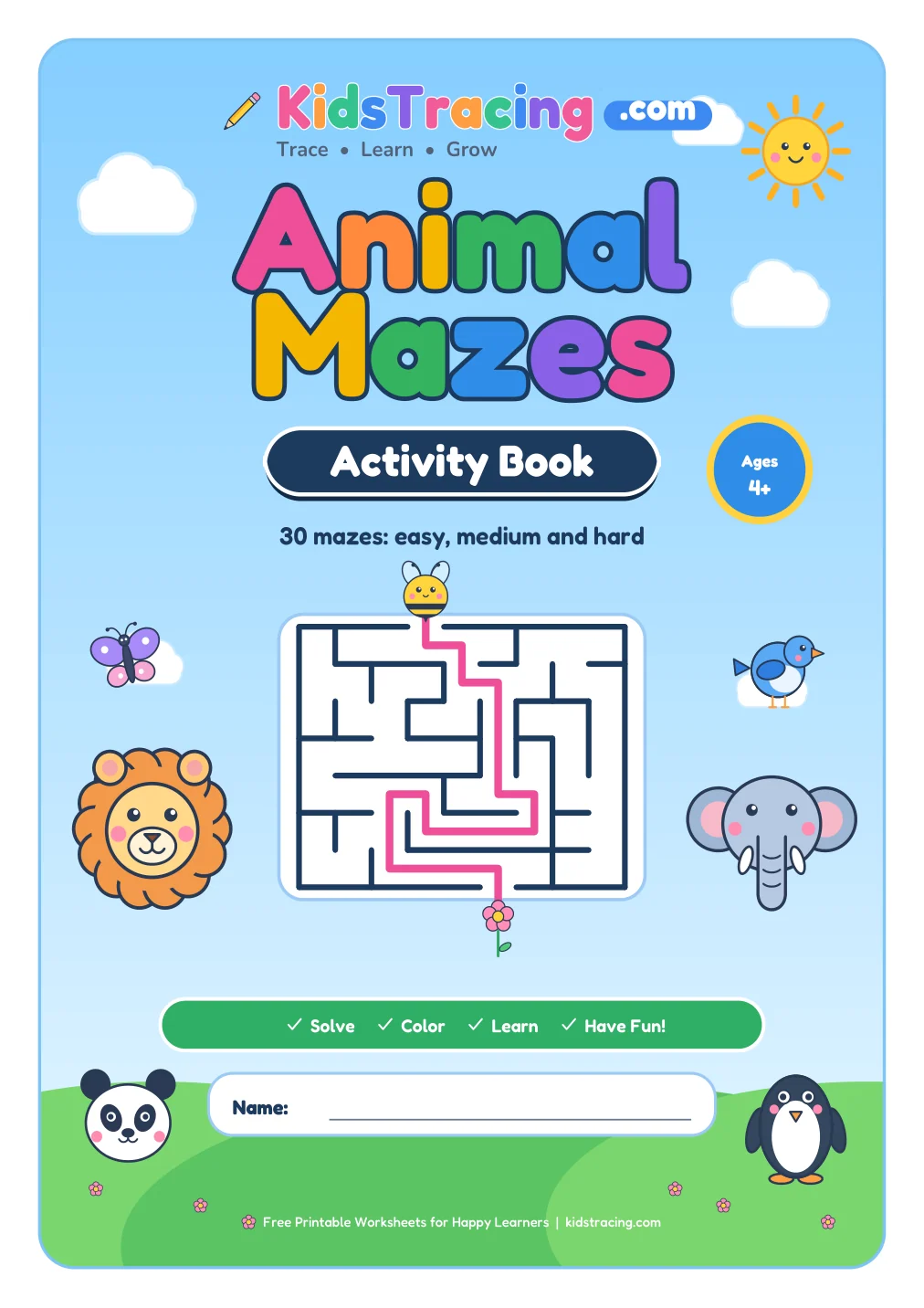
Quick answer: Start with a maze that has wide paths and only a few turns. Ask your child to find START and FINISH, trace the route with a finger, and then draw it with a crayon. Our free Animal Mazes Activity Book contains 10 easy, 10 medium and 10 hard puzzles, plus solutions, in A4 and US Letter PDFs.
What are animal mazes?
An animal maze is a path-finding puzzle with a playful goal: help a bee reach a flower, a monkey reach a banana or a duck find a pond. Children follow an open route between walls rather than drawing across them. Animal pictures provide a reason to finish the route and give adults a natural way to talk about animals and their habitats.
For younger children, the goal is not speed. A maze gives them a reason to look ahead, notice a dead end, make a choice and guide a pencil along a path. These activities can support visual attention, planning and hand control; they are practice activities, not a diagnostic test or a guaranteed developmental outcome.
Choose the right maze difficulty
Age ranges are only a starting point. A child who has never tried a maze may prefer the easy level even if they are older. Move up when the child can follow a path comfortably without frequent frustration.
- Easy: fewer intersections, short routes and broad corridors. Begin here for a first experience or for children still developing pencil control.
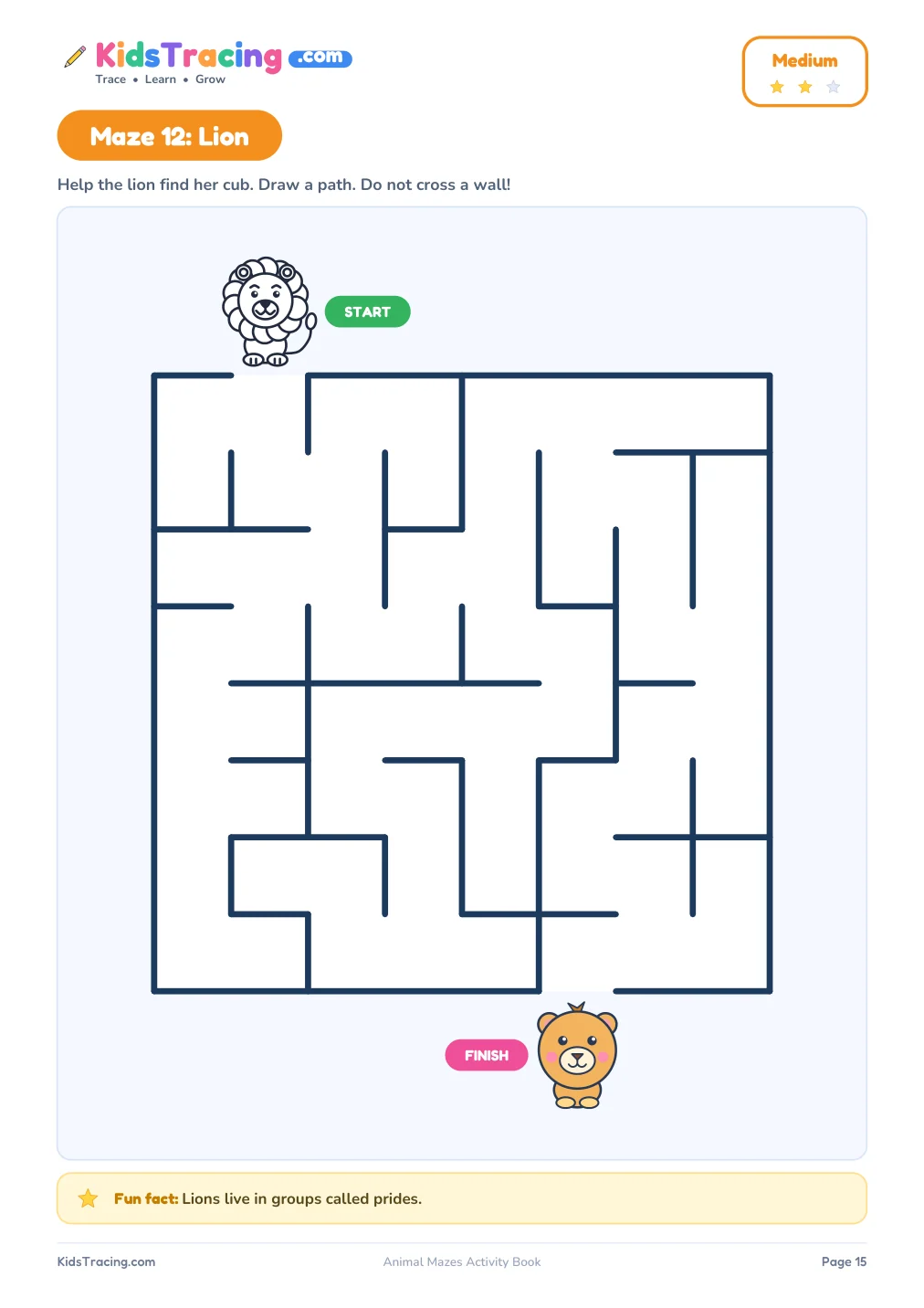
- Medium: more turns and dead ends. Encourage your child to stop, look ahead and try another route when a path closes.
- Hard: longer routes with more choices. Useful for children who enjoy solving puzzles independently and can keep track of a route.
What's inside our printable Animal Mazes Activity Book?
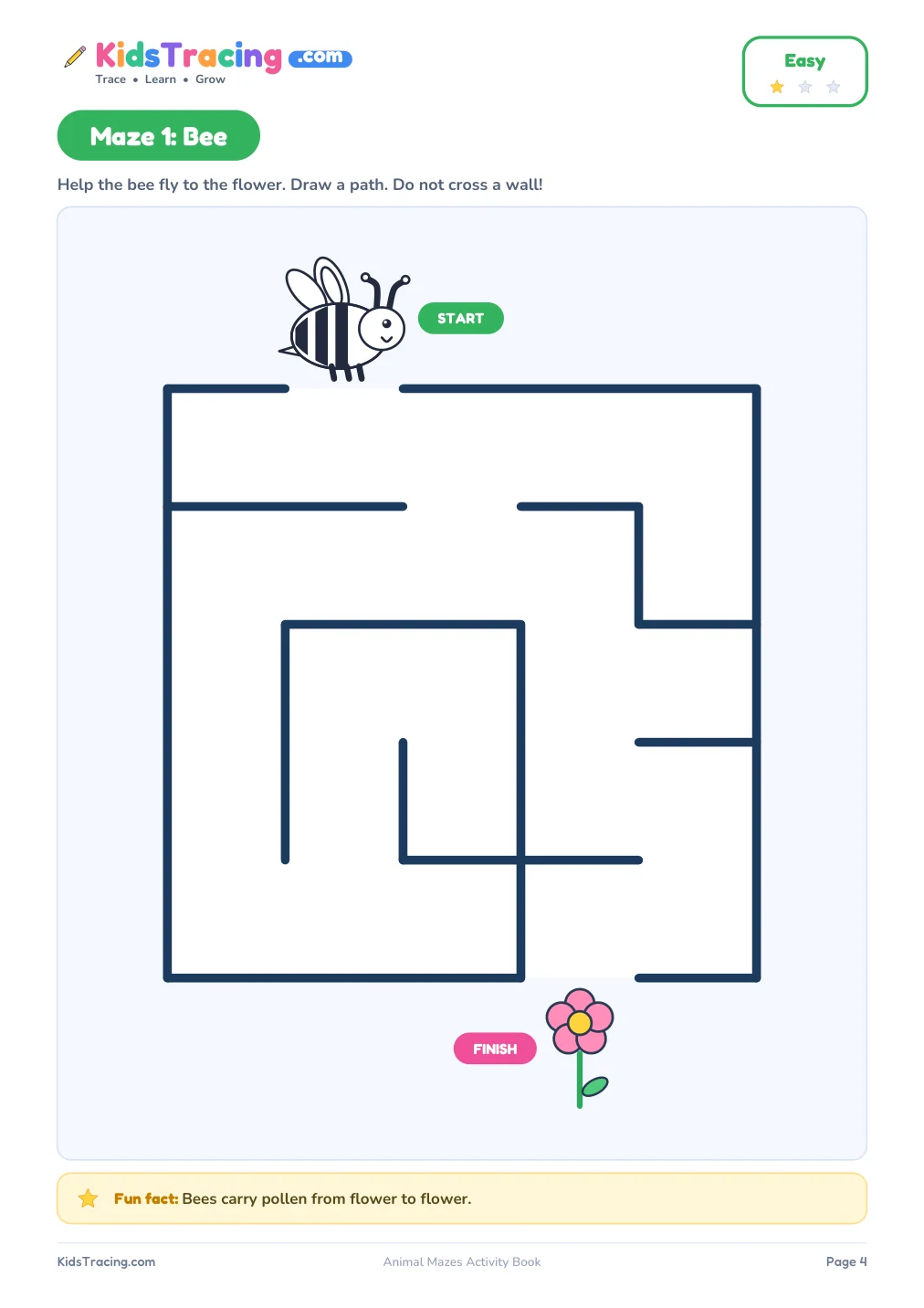
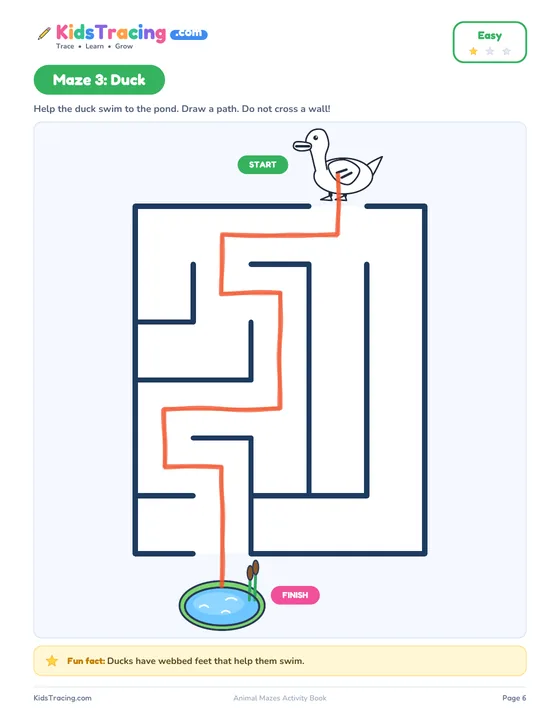
The KidsTracing Animal Mazes Activity Book has 40 pages in total. The first three pages introduce the activity and explain how to use the book. Pages 4–33 contain 30 animal mazes: 10 easy, 10 medium and 10 hard. Pages 34–38 contain the answer key, followed by a certificate and back cover.
Each maze gives the animal a destination, includes a short animal fact and leaves room for coloring. The easy puzzles begin with broad routes; later puzzles have more turns and choices. You can print a single page instead of the entire book.
How to teach a child to solve a maze: five simple steps
- Find the two points. Ask, “Where is START? Where does the animal want to go?” Let your child point to both.
- Use a finger first. Trace an open path with a finger before introducing a pencil. This reduces pressure to get it right immediately.
- Look one turn ahead. At an intersection, pause and ask which path looks open. Avoid giving the answer straight away.
- Handle dead ends calmly. If a route stops, move back to the last intersection and choose another. A dead end is part of the puzzle.
- Celebrate the process. Once the animal reaches its goal, invite your child to color the illustration or tell the animal's story.
Three playful ways to extend a maze activity
1. Tell the animal's story
Before solving, ask why the animal is traveling. “Why does the bee need the flower?” or “Where might the duck swim?” Keep answers playful and age-appropriate. The maze becomes a conversation, not only a worksheet.
2. Switch from finger to crayon
Have your child solve the same easy maze once with a finger and once with a thick crayon. This separates the problem-solving step from the motor task and makes the second attempt feel more manageable.
3. Make your own mini-maze
Draw a start and finish on blank paper. Add two or three wide corridors, then ask your child to add an animal at one end and its favorite food at the other. Older children can invent dead ends for you to solve.
Common mistakes and how to help
- Drawing through a wall: demonstrate the difference between an open path and a boundary with your finger, then let the child try again.
- Rushing into a dead end: ask “What can you see at the next turn?” rather than saying “Wrong.”
- Pressing too hard: use a comfortable crayon or pencil and let the child make light marks.
- Getting frustrated: switch to a shorter maze, work together briefly or stop and return another day.
How to print the free animal mazes
- Open the Animal Mazes Activity Book download page.
- Choose US Letter (8.5 × 11 inches) or A4, depending on your paper.
- Open the PDF and print at Actual size / 100% to preserve the intended worksheet proportions.
- To save paper, print only the easy, medium or hard pages you need. Use the answer-key pages only when helpful.
Frequently asked questions
What age are animal mazes suitable for?
Our workbook is designed broadly for ages 4–8, but ability and interest matter more than a birthday. Start with a wide-path easy maze and adjust based on how comfortably your child follows it.
Do children need to know how to read?
No. An adult can point out START and FINISH, and the animal illustrations make the goal understandable without independent reading.
Should children use a pencil or a crayon?
Either works. Thick crayons can be comfortable for early practice; a pencil may suit children who prefer a narrower line. Choose whichever tool the child controls comfortably.
Can I print only a few pages?
Yes. In your PDF print dialog, select a page range instead of printing the entire 40-page book.
Where can I find more maze activities?
Try the free maze worksheet generator to create additional puzzles, or browse the free printable workbooks collection.
Ready to start? Get the free Animal Mazes Activity Book (A4 or US Letter). Begin with one easy page, follow your child's pace, and make the animal's journey fun.